
Foot Zone Focus April 2026
The Vagus Nerve
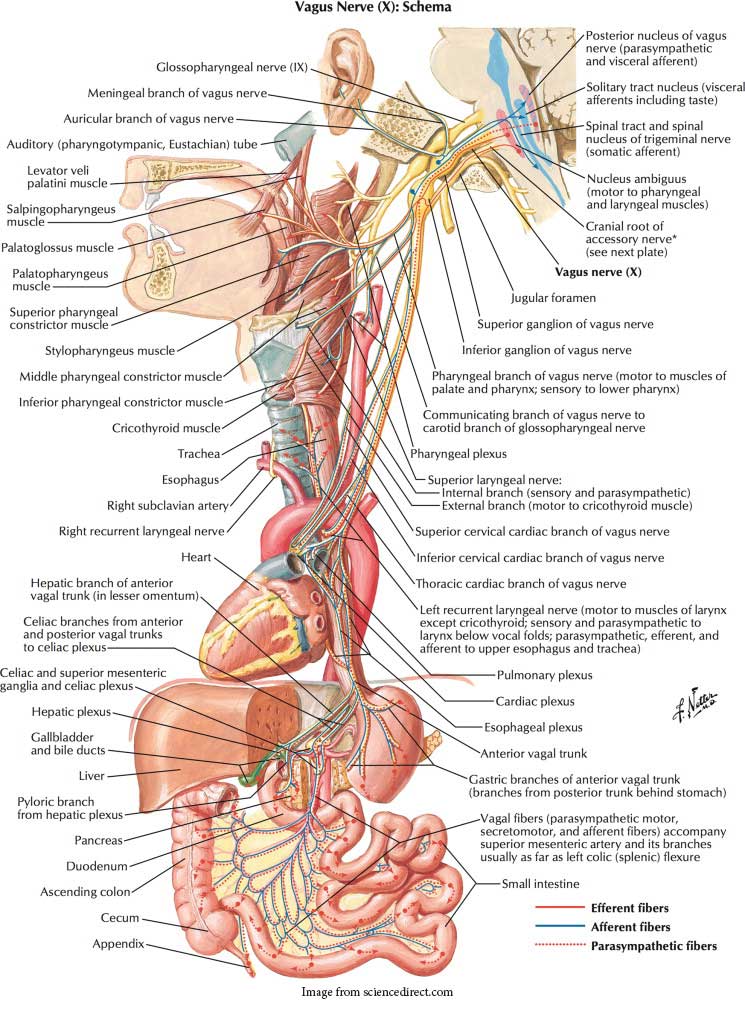
The Vagus Nerve extends from the hypothalamus area of your brain, hitting the ear, then going down through the chest, diaphragm, and then down to the intestines, with branches wrapping around your heart and communicating with many, many other organs on the way.
This very important nerve impacts every system of the body in one way or another. To paraphrase what I heard a fellow footzone instructor, Brad Noall, say (more than once) when I took his class about 10 years into my own years as a footzone therapist, “The Vagus Nerve is, or could be, the answer to nearly every question on a footzone class final test.” It is my belief, based on years of experience, that the Vagus Nerve impacts and plays a role, somehow or another, as this quote from Brad illustrates, with every system of the body!
I would like to share with you, in this newsletter, a small part of the things we discuss about the Vagus Nerve when holding Foot Zone classes at ButterflyExpressions. (I love to teach, especially anatomy for any reason whatsoever, so teaching ‘the Zone’ is particularly fun for me!)
The Vagus Nerve and the Nervous System
There is, of course, no time nor space for an entire Medical School treatise on the Nervous System or even just the Vagus nerve and all of its functions in the body in this newsletter
The Vagus is an integral part of every branch of the Nervous System. It has roles to play in both the Central Nervous System (Brain, Brain Stem, and Spinal Cord), and in the Autonomic Nervous System with its three divisions (Peripheral Nervous System, Sympathetic Nervous System, and what I refer to as the Social Engagement Network—which is a discussion for another day).
The sympathetic division mobilizes the body’s organs and systems during extreme situations such as fear, anger, and increased activity and exercise. The parasympathetic division allows us to “wind down”, returning to a less energy-intensive state when the crisis is over.
The Sympathetic division of the ANS
Often referred to as the “fight or flight” system, the sympathetic division becomes active when we are excited or find ourselves in an emergency or threatening situation. There is a third aspect to the sympathetic nervous system. This is the “freeze” mode.
The sympathetic division works at full speed when we are emotionally upset as well as when we are physically challenged. The adrenal glands pump excessive amounts of hormones into the system. Sympathetic nervous system activation can last for several minutes—or forever if we insist on remaining emotionally triggered. The effects will last until the excess hormones produced but no longer needed are destroyed by the liver. A compromised liver slows this process, leaving us in a state of hyperactivity and vigilance, with unneeded hormones creating havoc in our bodies. Often referred to as the “fight or flight” system, the sympathetic division becomes active when we are excited
The Parasympathetic division of the ANS
The Parasympathetic Nervous System is in charge of and controls the basic functions of the body that occur without a person even giving it a thought. These functions include, to name just a few, the heartbeat, breathing, digesting, and even sweating.
This system is most active when the body is at rest and not threatened in any way. Energy is being conserved by the body. The parasympathetic division is sometimes referred to as the “resting and digesting” division of the ANS. Blood pressure and respiratory rates are being regulated at low normal levels, and the digestive tract is actively engaged. The skin is warm because there is no need to divert blood supplies to fight or flight mechanisms. The parasympathetic division might even be described as the “housekeeping” (repairing) system of the body.
The Vagus Nerve and the Digestive System
One of the important functions of the vagus nerve is to send and receive messages to control the functioning of the digestive system. In fact, this nerve is the main communication between the brain and the digestive system.
The ability of the body to uptake nutrients is greatly compromised when communication between the Vagus Nerve and the digestive system is disrupted in any way. As a result, overall health deteriorates as organs are ‘starved’ of the nutrients that they need. The body, meaning the nervous system, simply cannot be in a ‘stressed and non-restful state’ and take up nutrients.
The sensation of being full is also transmitted to the brain by the vagus nerve. Stimulation and balance of the vagus nerve is a great help in controlling weight gain. Digestive enzymes are produced and released in the stomach according to this input, telling us whether or not we are full or hungry, satisfied or unsatisfied with what we have eaten. The vagus nerve has a tremendous impact on food cravings and the ability to control them.
The vagus nerve is also responsible for muscle control throughout our digestive systems. This would include the muscle contractions and relaxations that make up the peristalsis that moves things along to excretion in the intestinal tract.
Other Responsibilities of the Vagus Nerve
The excretion of wastes by the kidneys is influenced by the branches of the nerve that reach the kidneys and the bladder.
The Vagus Nerve stimulates secretions from the pancreas as well as stimulates the excretion of hydrochloric acid in the stomach. Diabetes and digestive issues of all sorts depend on a healthy Vagus Nerve and a healthy Nervous System overall.
This nerve is also responsible for sensory and motor functions to the pharynx, larynx, esophagus, trachea, and bronchi.
The vagus nerve regulates the heartbeat and blood pressure. Further, this nerve controls the coughing reflex, the breathing reflex, and the vomiting reflex.
It also helps regulate body temperature by stimulating sweat glands. Of course, many other glands of the body are also responsive to the Vagus Nerve! In fact, the entire endocrine system answers, in my ways, to signals from this important nerve!
Activating and Regulating the Vagus Nerve
Fortunately, there are many ways to activate and strengthen the Vagus nerve. One very simple way is deep breathing exercises.
Taking a deep breath in through your mouth and breathing so deeply that your stomach rises and your diaphragm expands, then slowly breathing out through your nose, will kick your vagus nerve into gear and activate your parasympathetic nervous system.
It is claimed that doing any type of singing strengthens the Vagus Nerve.
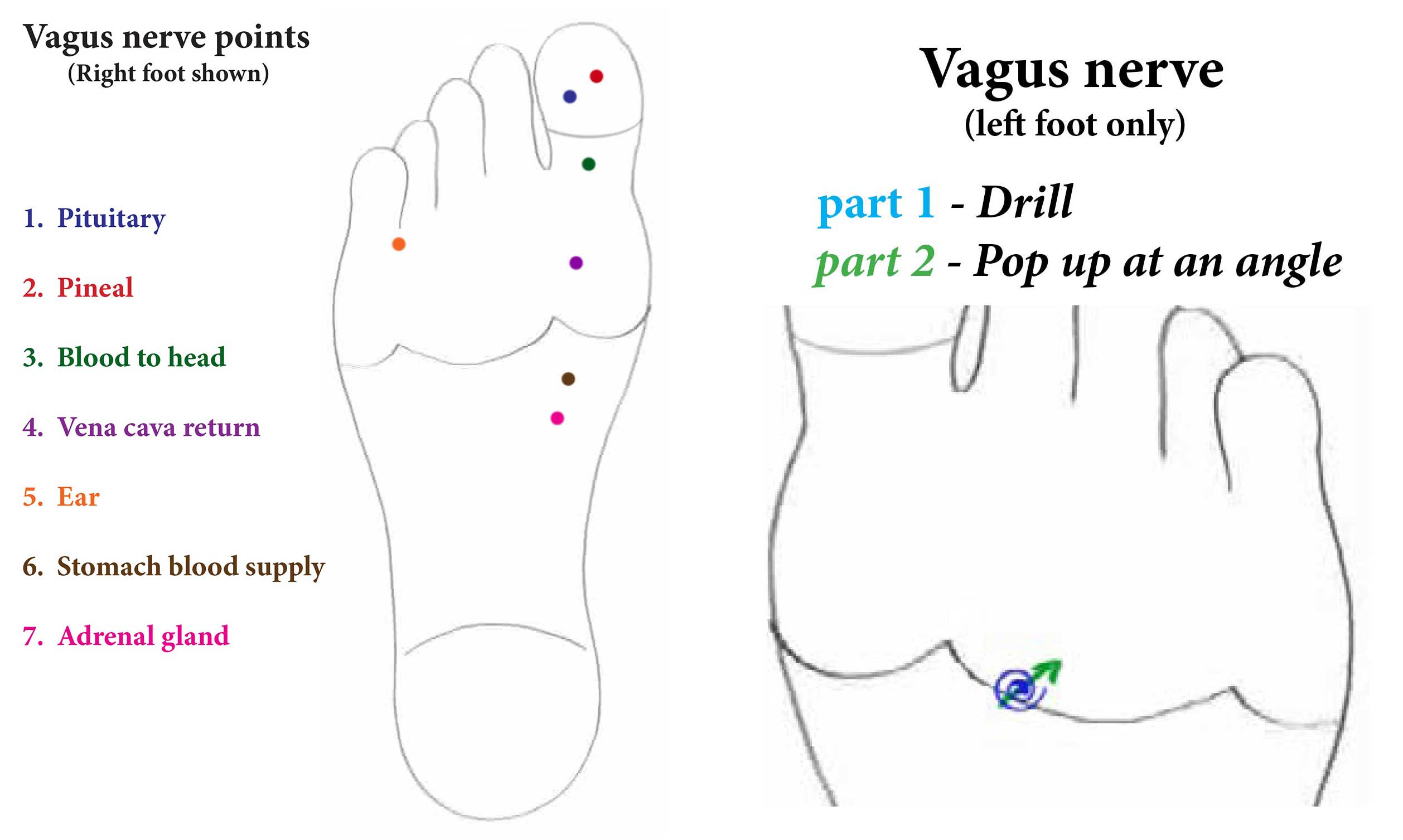
AND, of course, there are Vagus nerve foot-zone points on the feet (or points on the hand if you can figure out how to make the correlation).
In This Issue
Essential Oils
Herbal Remedies

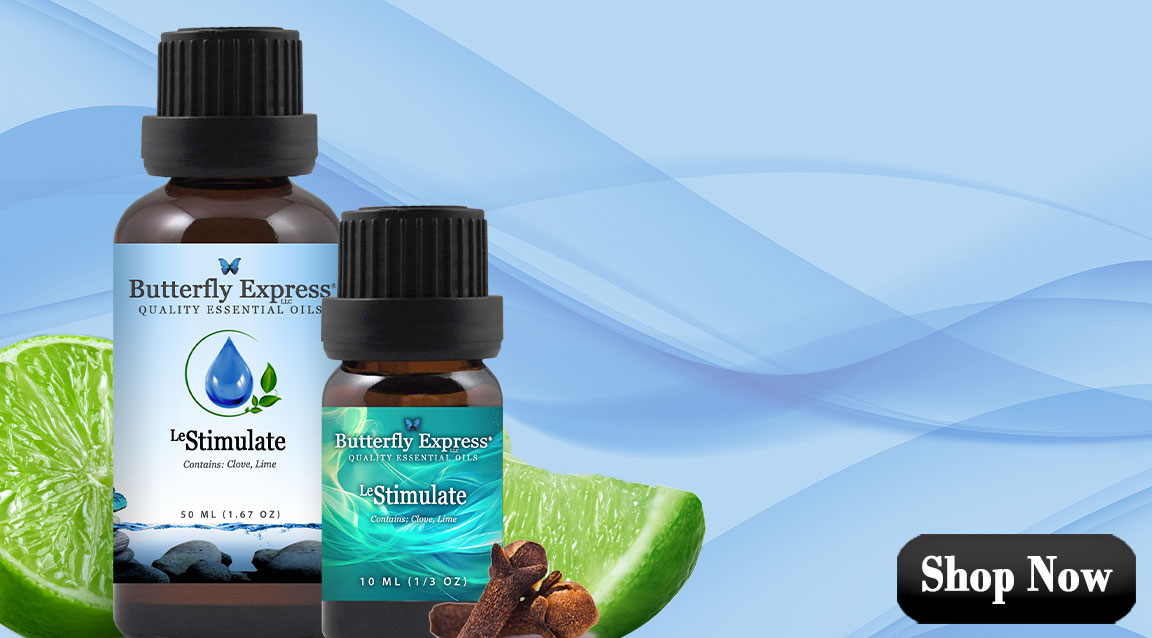
LeStimulate Essential Oil Blend
This unusual but very effective blend contains only two essential oils. They are Clove Bud and Lime—a healing spice and a citrus fruit. Why is this important? Briefly explained, the healing properties of an essential oil, both physically and emotionally, vary a great deal according to the part of the plant used and the time of the year in which it is best harvested.
Clove Bud
New experiences of growth await us if we are ready and willing to accept them and move forward in our lives. This usually means that we will need to make one dramatic change or another. Clove is the perfect choice to prepare ourselves to accept, and even welcome, those changes. The aroma of Clove is, literally, heart-warming. It helps us to look away from ourselves and our own needs, so that we can better see the needs of family members and friends. Clove helps us translate this “seeing” into practical, everyday living and giving.
The aroma of Clove bud improves memory, alleviates mental and physical exhaustion, protects from negative energy, and creates feelings of cooperation and courage. Clove helps us to move forward, exploring new possibilities and experiences, with enthusiasm.
Clove bud oil is nutritionally very dense. When Clove Bud essential oil is absorbed into the body, it provides missing nutrients. Because Clove oil improves the overall nutrition in the body, it can be of benefit in many physical conditions. Clove Bud is excellent in the early stages of illness to kill viruses and bacteria. Clove’s stimulative and nutritive properties are helpful later on, during the recovery phase, to rebuild energy and stamina.
Lime
Lime essential oil is a perfect choice for the very weary—those who are so weary of trials and troubles that they feel far older than their years on earth would indicate. Certainly, a person in this state is not ready for any unavoidable ‘dramatic changes’ that may be necessary for them. Nor are they ready for any service opportunities or even the responsibilities they must shoulder at whatever stage of life they are in, whether this is educational opportunities, child-rearing, being alone, or caring for an elderly parent.
Lime oil is made almost exclusively from the rind (peel) of the fresh, young fruit. The fruit of the tree represents the ability of the plant to survive and thrive to fruition. Essential oils from this stage of plant life can help us be finishers, recognized for our diligence and dependability as well as for our joyful, passionate natures. Interestingly, if you think about it for a moment, clove bud is also the ‘fruit’ of the plant from which it is harvested. Obviously, ‘citrus fruits’ have very different healing properties from ‘fruits’ that are also spices.
With a bit of pondering on the healing properties of these two very different essential oils, it becomes clear why lime is the perfect companion for clove bud in creating a blend that gently stimulates every aspect of the Nervous System with a particular affinity for the Vagus Nerve. Gentle stimulation of the vagus nerve results in greater detoxification, which benefits all aspects of the body.
The blend of these two oils that results in the powerful LeStimulate blend improves memory, alleviates mental and physical exhaustion, helps a person overcome discouragement, apathy, listlessness, and depression. This is a good oil to diffuse when studying. It is helpful when you are feeling run down, depressed, or just need a boost of vitality. LeStimulate contains essential oils that are known for helping to increase the production of leukocytes that aid in fighting infections. Adding LeStimulate to infection-fighting regimens is a great idea.
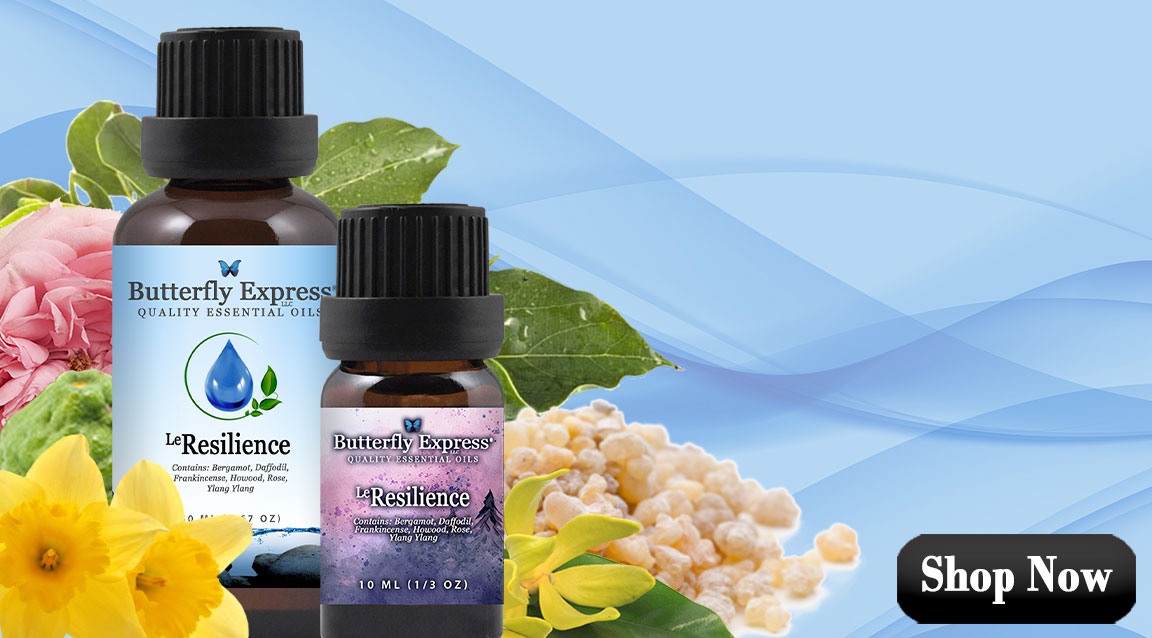
LeResilience Essential Oil Blend
The word ‘resilience’ is defined as the ability of a substance or object to spring back into shape. This blend, carrying the name LeResilience, has the capacity to help us be in a better place, emotionally, to withstand or to recover quickly from the difficulties and stresses of our lives.
LeResilience is an excellent blend to use during times of emotional transition, making it a perfect companion or follow-up oil for the LeStimulate blend described above. This blend has a strong affinity for the heart chakra. An open heart always brings more peace, love, and appreciation into our lives. LeResilience can help alleviate anxiety about the future, soothe grief, and even help us release anger and resentment.
LeResilience has a heady, sweet floral aroma that reminds me of LeCherish or LeExpressions, but is much less expensive. There is, in my mind, no complete substitute for either LeCherish or LeExpressions, but LeResilience is a high-frequency essential oil and has amazing emotional healing capabilities.
Daffodil and Rose De Mai are very beautiful, strong floral fragrances that are tempered by the sweetness of Howood and Ylang. Bergamot adds a lively, zesty note while the frankincense completes the blend with a spicy rich base.
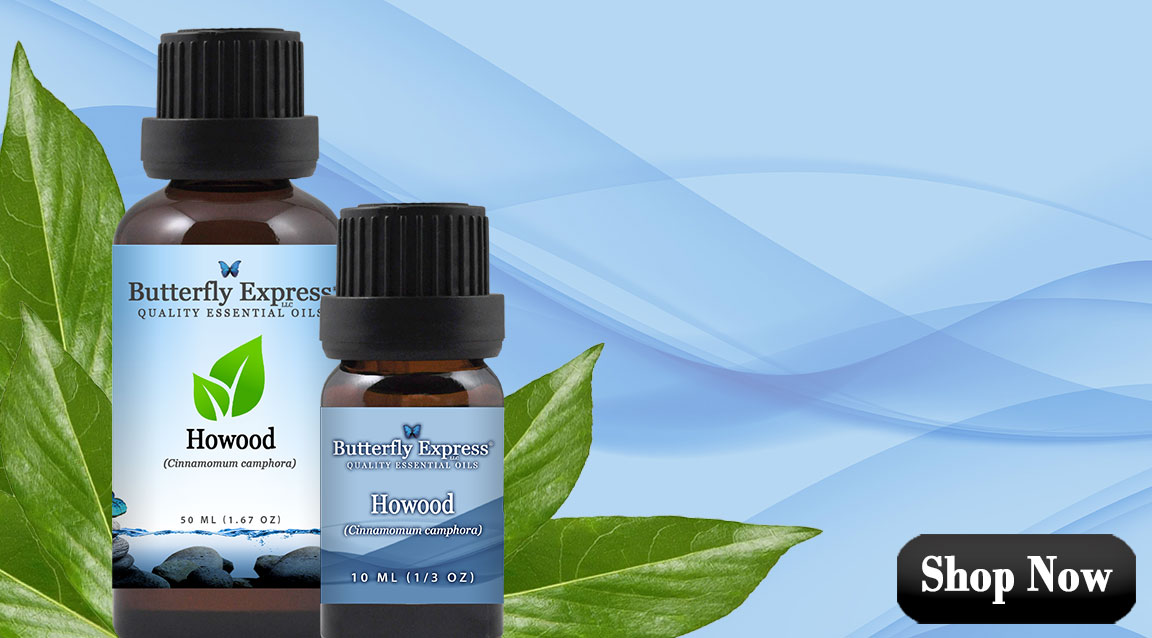
Howood Essential Oil
Howood is similar in composition and nature to Rosewood. It can be used for most applications in which you would use Rosewood. Howood is being promoted around the world as a viable substitute for Rosewood, which is becoming an endangered species. It seems to be quite a good substitute, actually, but I hope we can always purchase and use both as they do differ in some subtle but important ways. However, make no mistake, Howood is a beautiful oil in its own right.
Howood has a sweet, woody, and slightly floral scent that promotes peace, tranquility, and grounding. It is used to combat stress, anxiety, and emotional fatigue.
Physically, Howood is a cellular stimulant and regenerator (cytophylactic), much like Helichrysum. This makes it a very valuable oil, especially for the price. Howood also has some very potent anti-infectious and antiviral properties. It is a great support for the immune system and is especially helpful in relieving respiratory congestion.


The next four recipes are nervine formulas. Nervine herbs are anodyne (meaning they relieve pain). Most of them are also antispasmodic, meaning they alleviate such things as muscle spasms, coughing fits, and any pain that is spasmodic in nature. They are also anti-inflammatory.
Nervine herbs calm, heal, and strengthen the nerves. Any of these nervine formulas can be used for anxiety, any type of stress or stressful situation, premenstrual tension, menstrual cramping, hyperactivity, nervous exhaustion, and depression.
Most nervine herbs can be used effectively to quiet heart palpitations and stabilize irregular beating of the heart. However, if heart palpitations and irregular heartbeats occur frequently, it would obviously be helpful to add some herbs for heart health and see a physician quite soon.
Nervine herbs are not generally narcotic. Certainly, the ones that I have used in these formulas do not fit in that category. They do not make a person feel groggy or disconnected. Although they can help us relax into sleep, they do not present a problem for driving or operating machinery.
NV
NV is the strongest and most complete of the 3 adult nervine formulas provided here. The basic formulation that I created years ago contained 11 of what I considered to be the best nervine herbs. However, the Lady Slipper in that composition is now considered endangered, and many species are ‘protected’ by statute and law. I took the time this morning to look up Lady Slipper in every herbal book that I have. Unsurprisingly, none of them—not even my copy of Back to Eden, which was originally copyrighted in 1939 by Hethro Gloss—contain a description of Lady Slipper’s medicinal uses.
Herbalists today use passion flower, motherwort, or valerian root instead. The original NV formula included Valerian root, and I eventually substituted motherwort and passion flower for the Lady Slipper as it became difficult or impossible to find. These two herbs make an excellent substitute, both constituent-wise and healing-wise.
NS
NS is comprised of many of the same herbs as NV, a total of six if Lady Slipper is included, as it once was. Once again, motherwort and passion flower have been substituted for Lady Slipper. St. John’s Wort make a nice addition to this formulation for the treatment of anxiety attacks or general sleeplessness.
Both Spikenard and Valerian have been left out of the formulation due to the possibility of a negative reaction to these herbs that is sometimes seen. Valerian root, and the occasional reaction to it, is described in more detail in the more extensive Butterfly Expressions monthly blog. The link to this newsletter is here.
NS is, far and away, the nervine formulation that I recommend most often for people I know who are trying to calm or rebuild their nervous systems or recover from an accident or surgery that has damaged nerve-rich areas of their bodies.
NT
NT, formerly called Nerve Tonic, is exactly what the former name implies. It is a ‘tonic’ for the nerves. I believe that herbal remedies work because they provide nutrients that would be (and are) otherwise deficient in the person’s daily diet. The largest single ingredient in this formulation is oatstraw. The principal reason to include this herb is to treat general fatigue and to improve stamina. Oatstraw gently raises energy levels, improves overall mood, and lends support to over-taxed and depleted nervous systems.
I recommend oatstraw and the NT formulation that it contains for convalescence from serious illnesses. Oatstraw contains low amounts of vitamins E and K, and is rich in calcium, chromium, iron, magnesium, phosphorus, selenium, silicon, sodium, cobalt, manganese, potassium, tin, and zinc
NVC
This is a nervine formula especially for children, and it contains only the mildest of nervine herbs. This formula is usually made as a glycerite, since it is intended to be used by infants and small children. Frequent small doses are more effective than larger doses. It is mild enough to be given as often as every 15 minutes for the first three or four doses.
NVC is especially helpful when a baby is fretful with colic, or for a baby who frequently startles awake during naps or during the night. NVC stimulates the body’s defenses when colds, flus, fevers, and other acute illnesses are just setting in.
NVC is mild enough to use, in moderation, each evening with a fretful child to promote restful sleep.
Skullcap
Skullcap is slower acting but more permanent in its action than many of the other nervine herbs. It has no side effects and may—in fact, should—be taken regularly for quite a period of time for maximum effect. This is a great herb for boosting immune function and reducing inflammation throughout the body.
Hawthorn
Hawthorn is a traditional cardiovascular herb often used to support heart health and reduce stress. It is known to affect the vagus nerve by enhancing parasympathetic tone. It helps manage palpitations, lowers blood pressure, and promotes relaxation, which are actions associated with Vagus nerve over-stimulation.
List of Topics
Tip: Use the “find on page” or ctrl+F to quickly find where these topics in this blog.
Autonomic Nervous System,
balance,
blood pressure,
brain,
breathing,
chest,
Clove Bud,
communication,
controlling weight gain,
coughing reflex,
depression,
diaphragm,
digestive,
digestive enzymes,
digestive system,
endocrine system,
energy,
exercise,
fear,
flight,
food cravings,
freeze, functions,
glands,
grounding,
Hawthorn,
heart,
heartbeat,
Howood,
intestines,
kidneys,
larynx,
Resilience Essential Oil Blend,
Stimulate Essential Oil Blend,
Lime,
liver,
lungs,
memory,
motor functions,
nervous system,
nutrients,
NV,
NVC,
NS,
NT,
organs,
pancreas,
parasympathetic,
parasympathetic division,
peristalsis,
pharynx,
pressure,
reflex,
respiratory rates,
sensory,
Skullcap,
Solace Essential Oil Blend,
stimulation,
stress,
sweating,
sympathetic,
sympathetic division,
temperature,
trachea,
vagus,
vomiting reflex
About The Author

lareesbutterfly@gmail.com
Related Posts

Foot Zone Focus August 2026
IMMUNITY AND IMMUNE BUILDING Energetic Responses During a Zone Session I love learning myself! I…
07 April, 2026Foot Zone Focus July 2026
The Adrenal Glands and That Important Hormone Cortisol Albert Einstein is reputed to have said…
07 April, 2026