
Lymph Care Using Foot Zone Techniques
The lymphatic system is a vital part of our circulatory and immune systems. It consists of a network of lymphatic vessels, lymph nodes, and lymphatic organs, including your spleen and tonsils.
How do I adequately describe the lymphatic system without needing as many pages as I print up when teaching about this body-wide system during the Foot Zone therapy classes that I teach?
Let’s begin today by imagining a team inside your body that is constantly working to keep everything—and I do mean everything!— in balance. That is our lymphatic system!
Unfortunately, the amazing lymphatic system has a downside, as well. Bacteria, viruses, and cancer cells that enter the lymphatic vessels can—and sometimes do, if the system is not healthy and working properly—use this system to travel throughout the body. This danger is supposed to be kept to a minimum as lymph fluid passes through the many lymph nodes situated throughout the body. If the immune system is healthy and the lymph fluid is moving as it should be, all will be well. Even cancer cells will be eliminated in an early, unnoticed stage. If not . . . .
Our lymphatic systems also contribute in very important ways to our ability to absorb dietary fats and fat-soluble vitamins. In addition, our lymphatic systems also transport cellular waste, debris, and toxins away from tissues, thus protecting tissues and organs throughout our bodies.
Caring for the various parts of the lymphatic system is precisely what we are doing during a very large portion of every foot zone that we give or get!
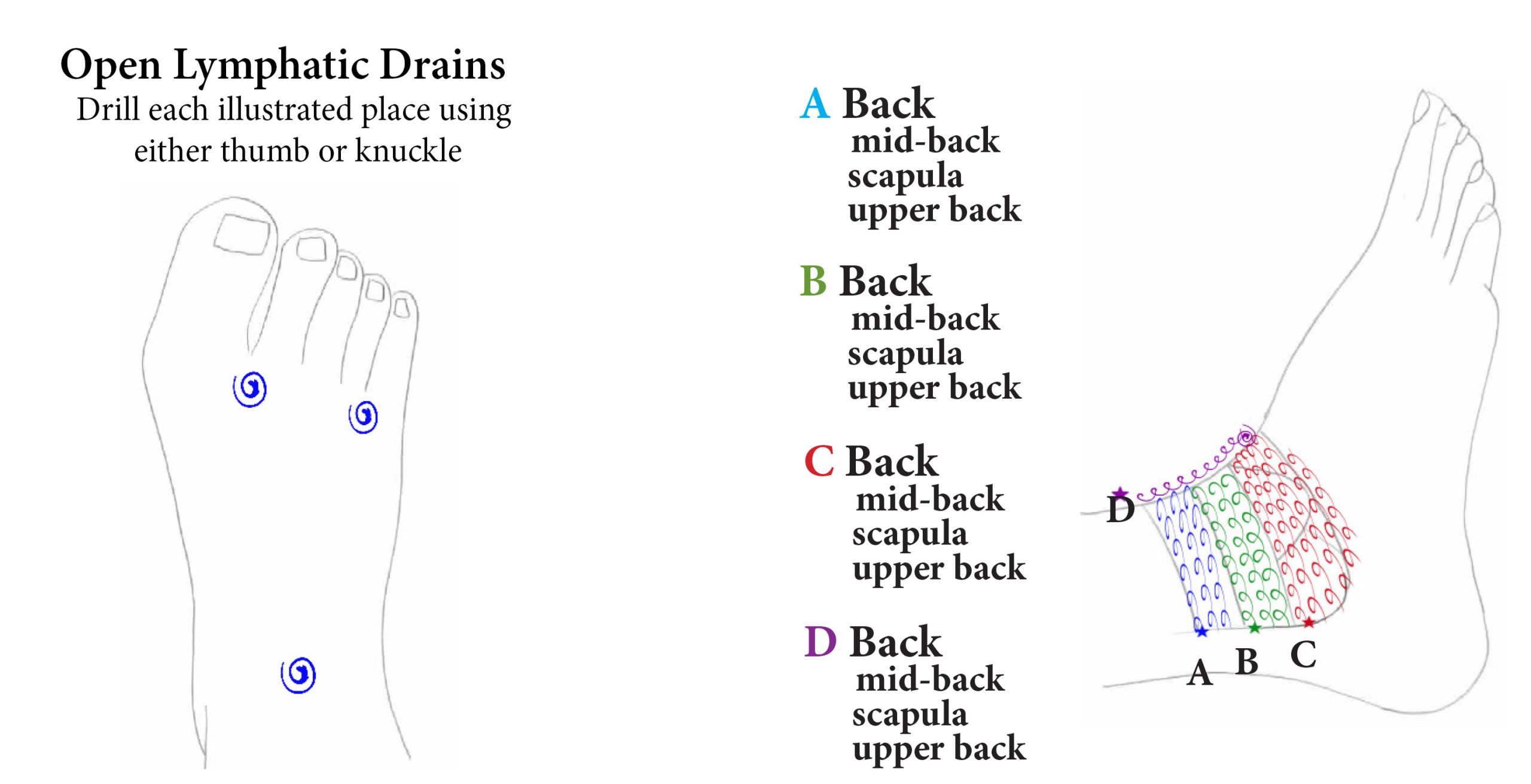
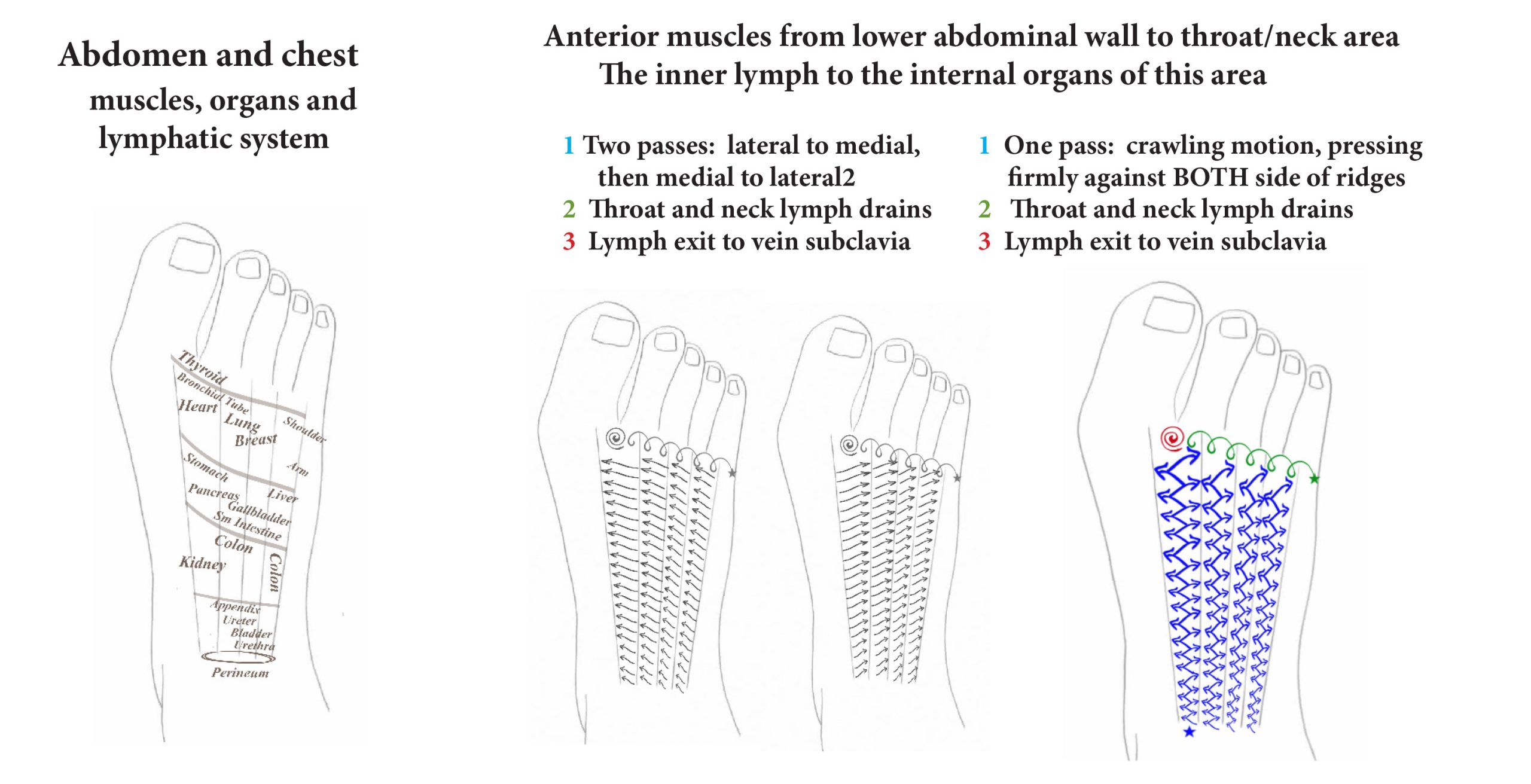
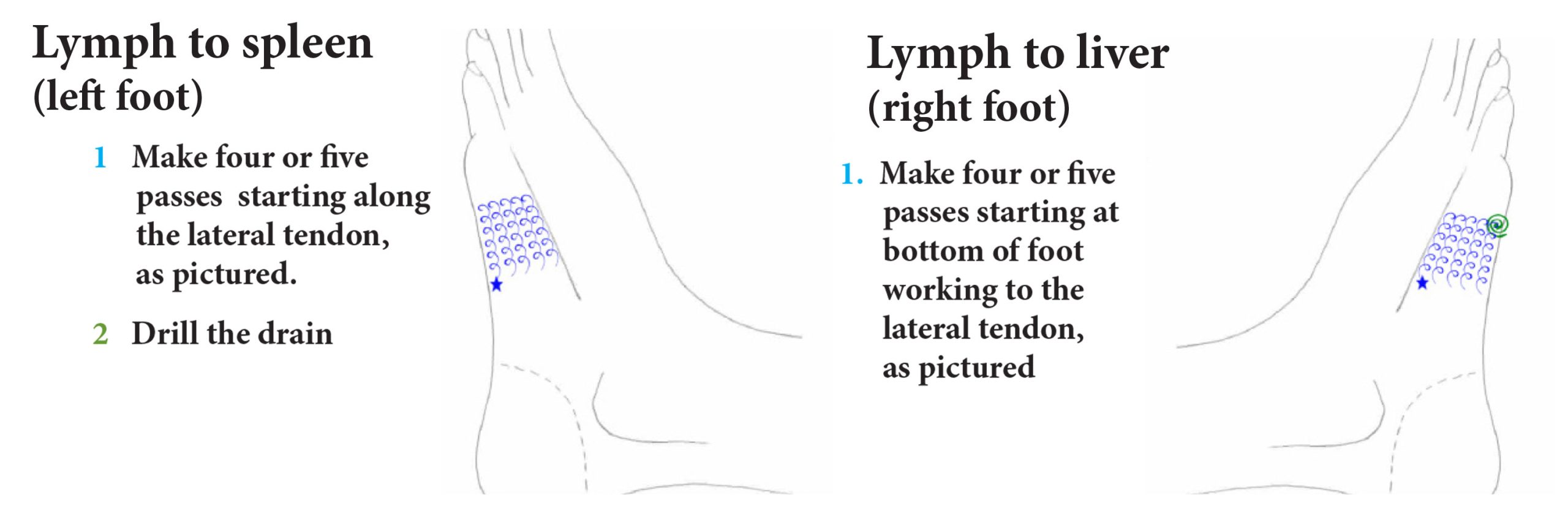
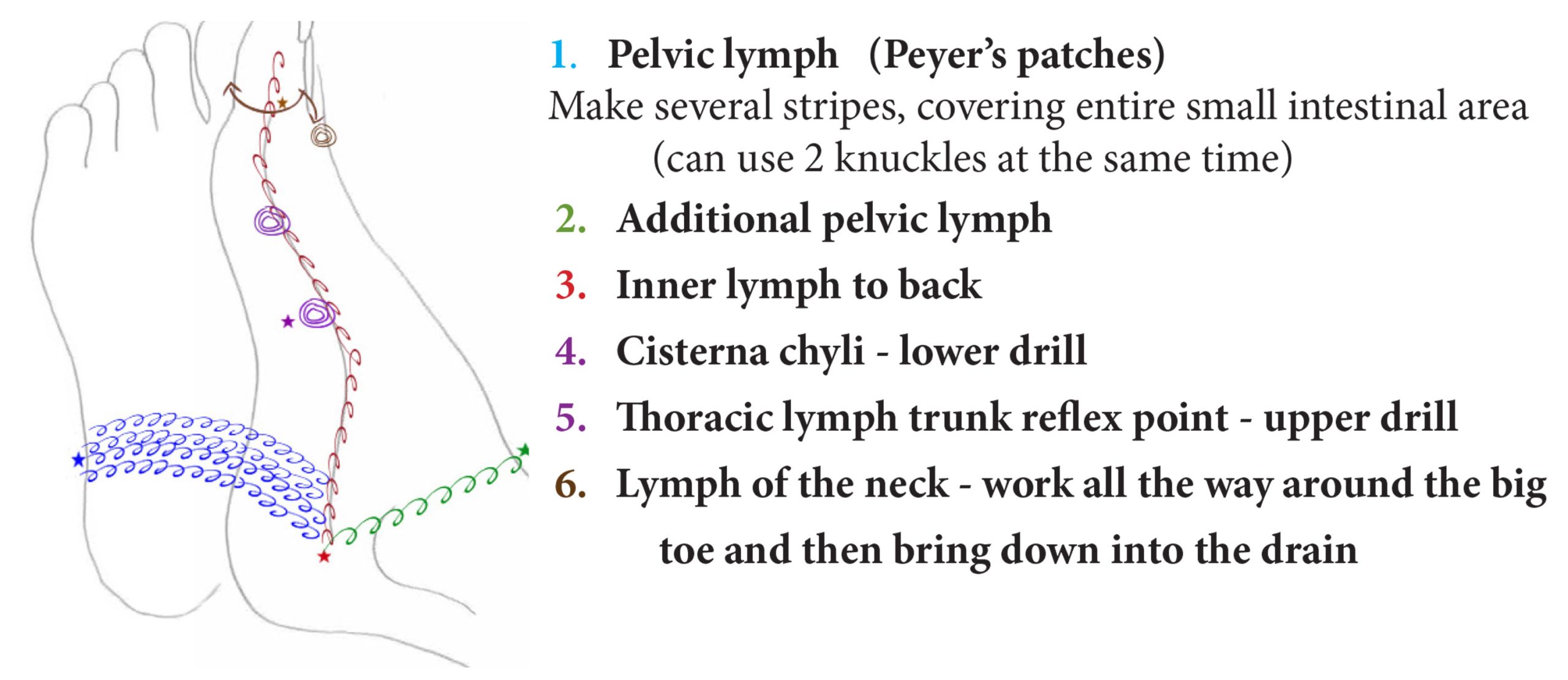
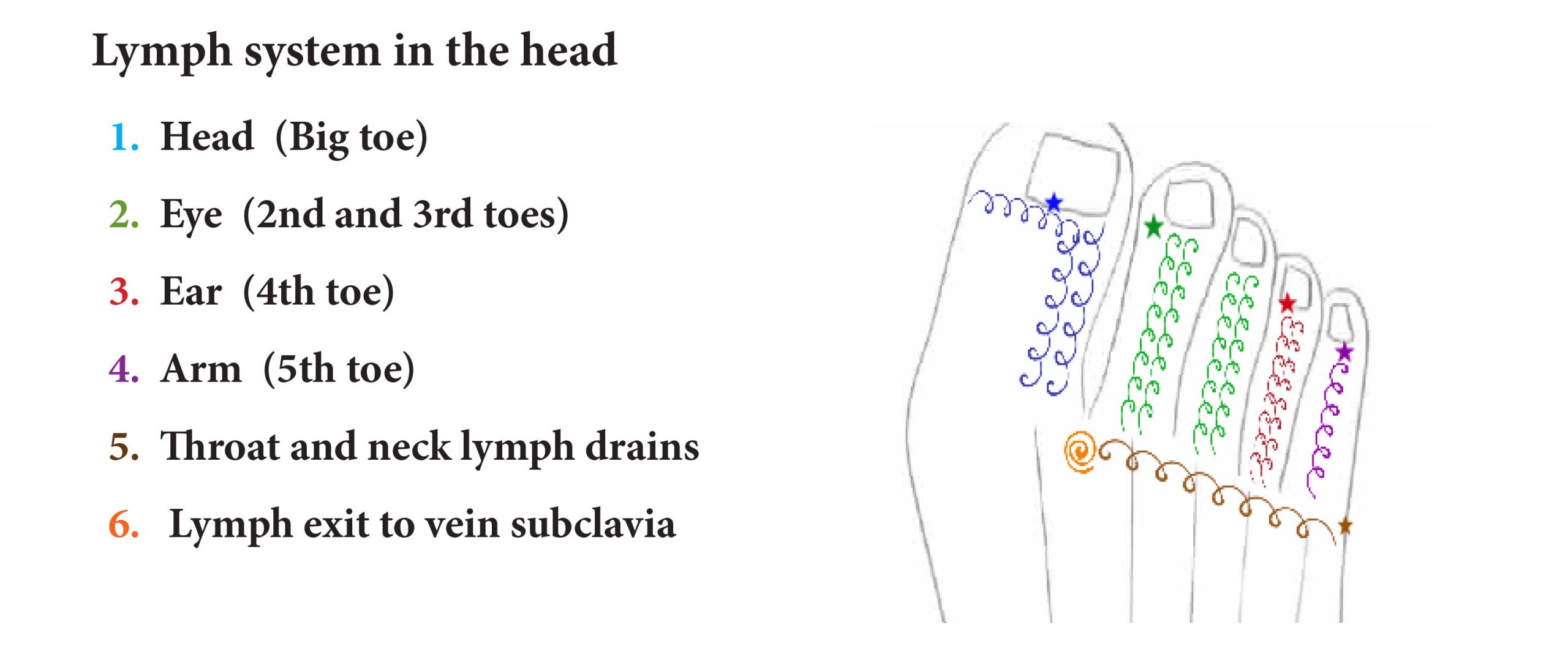
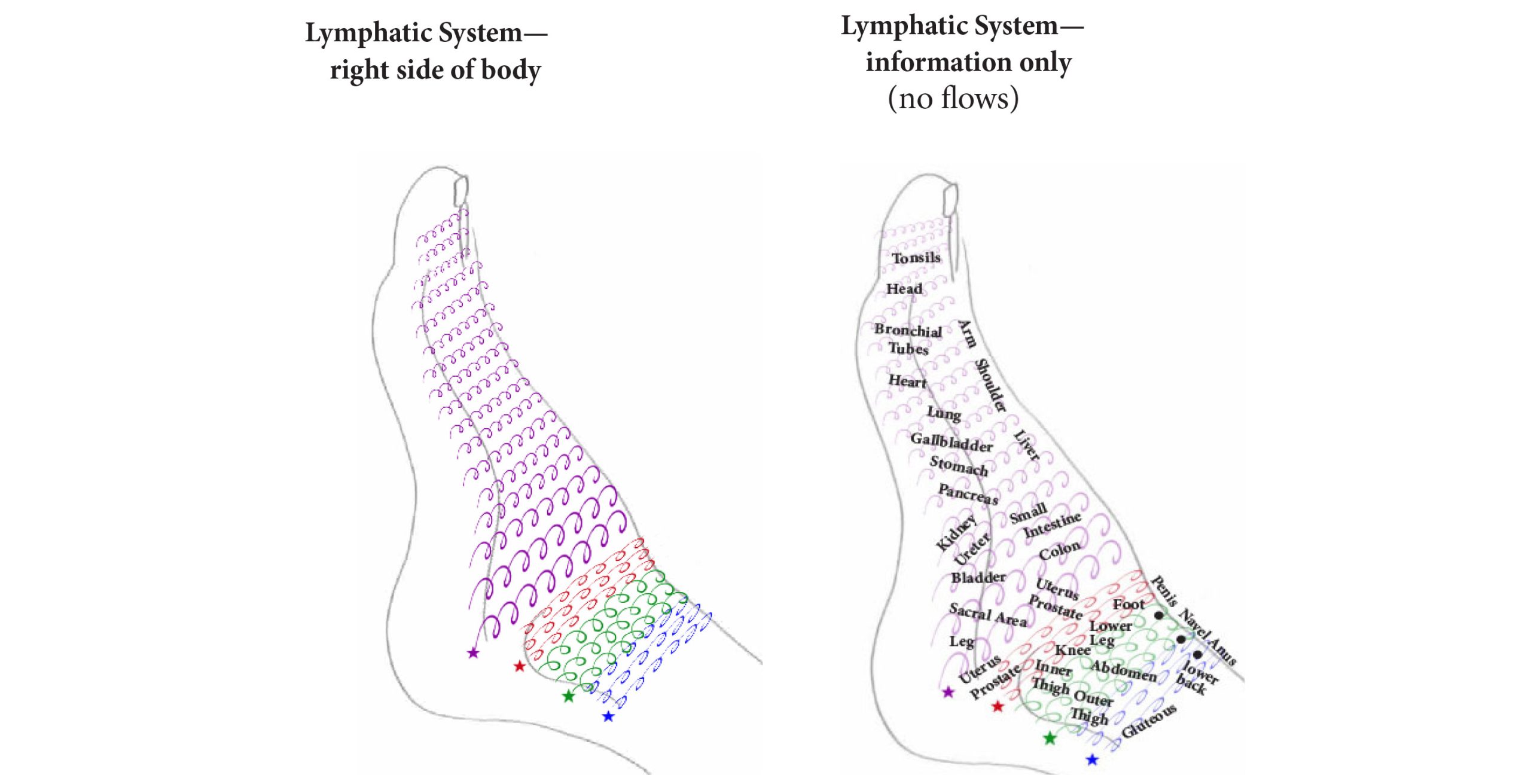
Some Simple Drawings of Foot Zone ‘Flows’ for Lymphatic Congestion as I Work Them.
(Shown only the right foot)
A Few Ways (Besides the Foot Zone) to Get Lymph Moving
1. Breathe deeply. There is approximately three times more lymph fluid moving through the body than there is blood, but the lymph has no pump to keep it moving. Deep breathing—the kind in which your abdomen moves with each breath, stimulates the flow of lymph, and energizes the immune system.
2. Add exercise to your breathing, and you will have turbocharged your lymphatic system and increased, in beneficial ways, your immune responses. A rebound exerciser is believed to be particularly good for your lymphatic system. Whole Body Vibration (I call it being jiggled and I love it!) seems to make my lymphatic system very happy. Involuntary muscle movement promotes lymph flow.
3. Drink plenty of water. Room temperature, or even hot water, sipped frequently throughout the day will re-hydrate the body and get the lymph moving.
4. Alkalize your diet. Simply eat more alkaline foods than you do “junk” or highly acidic foods. Avoid as much as you can sugary treats and beverages. Lessen the amount of meats, breads, grains, dairy, and processed foods that you consume each day. Eat more fruits and vegetables. Green, leafy vegetables provide chlorophyll, which will purify your blood and cleanse your lymph.
5. Add a few good-quality nuts to your diet. Raw, unsalted nuts and seeds are powerhouses of minerals, vitamins, protein, unsaturated fatty acids, and antioxidants.
6. Add herbs, especially lymph-building ones, to your life on a daily basis. A few suggested herbs include: astragalus, barberry, calendula, dandelion, echinacea, elecampane, garlic, ginger, goldenseal, myrrh, rosemary, sage, thyme, and white oak bark.
7. Use essential oils regularly. Regular use of essential oils helps to cleanse the body from toxins, free radicals, cellular debris, heavy metals, petrochemicals, bacteria, and a host of other unwanted things. Suggested oils include cypress, orange, grapefruit, rosemary, peppermint, lemon, and blends such as Butterfly Express LeSolace, LeAgeless, LeCherish, LeCinnamonBear, LeEndoRelief, LeLiteN, LeReflections, LeMillenia, LeRevitalize, LeSunburst, LeSynopsis, LeUnDone, and LeVitality. Which oil to use will depend a lot on where in the body the lymph clogging is most prevalent and what else needs to be accomplished.
8. Clay baths and foot soaks use the pores of the skin, especially the large pores of the feet, to cleanse the liver and move lymph fluid.
9. Gentle massage. It is believed that a gentle massage can push up to 75% of stagnant lymph back into circulation, freeing up trapped toxins.
10. Keep your skeletal structure aligned through chiropractic and/or the regular use of LeMillenia essential oil. LeMillenia, added to the bath or shower, can help the body realign itself or maintain a chiropractic alignment for a much longer time.
11. Dry skin brushing, especially before showering. Use a natural bristle brush. Brush your dry skin in circular motions upwards from the feet to the torso and from the fingers to the chest. The point is to work in the same direction that our lymph flows—toward the heart.
12. A shower in which hot and cold are alternated every few minutes. (Sorry, this one is not for me!) Heat dilates and cold contracts. The lymphatic and circulatory systems run alongside each other in the body. Alternate hot and cold increases both circulation and lymph drainage. Contraindicated for pregnancy and heart conditions.
The heart is an incredible muscle—yes, muscle. The amount of work done by the heart each day is almost too incredible to even believe. The body contains approximately six quarts of blood. This blood is pushed through the blood vessels over 1000 times in a day. The heart, incredibly, pumps about 6000 quarts (about 1,500 gallons) of blood in a single day for all the days of one’s life!
There is simply no way that I can cover the complicated workings and anatomy of the heart in this article. (I certainly do try during Foot Zone Therapy classes, as some of you can probably attest, to do my best with pages and pages of information—possibly too much information—in the material provided.
Two systems regulate heart activity. One involves the nerves of the autonomic nervous system and acts as an accelerator and as brakes for the heart rate. The other is the intrinsic conduction system—nodes which are built right into the heart tissue. This system sets the basic rhythm of the heart. For this article, let me stress firmly (very firmly) that when a person is under either physical or emotional stress, the heart works much too hard, pumping faster and more forcefully, in order to make more oxygen and glucose available to the systems of the body. The good news: For people who know how to handle stress more calmly or know how to rest and rejuvenate between periods of stress or hard work, the heart will slow down and beat steadily. This gives the heart a period of rest when the crisis is over.
Stress Cardiomyopathy – Broken Heart Syndrome
A troubled mind may lead to a broken heart in a very literal and physical sense.
Many patients arriving at emergency rooms and doctors’ offices with symptoms of a heart attack have just experienced the death or loss of a loved one. Traumatic experiences such as a car accident or mugging are also recognized as triggers for heart attack-type symptoms.
Intense emotional events can trigger your sympathetic nervous system, unleashing a flood of chemicals. This sudden surge of chemicals can stun the heart’s muscle and leave it temporarily, and sometimes permanently, unable to pump properly. In medical speak, this is referred to as ‘Stress Cardiomyopathy’. Energy workers often refer to this situation as ‘Broken Heart Syndrome’. It is very real!
My point? If we insist on living our lives in real or imaginary stress, we will be increasing, daily, the stress on our hearts.
A second point? Anything that strengthens you emotionally—whether oils, herbs, exercise, faith, or anything else—will benefit your heart. . . and the heart certainly needs all the help that we can give it. Statistically speaking, heart disease of various types is the leading cause of death for both men and women and has been for more than a century!
The end of summer and the upcoming return to school for children, teens, and college students can be a stressful time for everyone involved, including parents. This seems to be true to some extent, no matter the age of the child or even how well the previous school year went. And then, the school day usually requires the student to focus and pay attention while sitting at a desk—something many children find quite difficult. Then there are the issues of getting homework done and back to school with the children, young or old!
The remedies focused on as specials and offered at discounted prices, were chosen with these issues in mind. However, as you will quickly see from the product descriptions, they address energy levels, the ability to focus and pay attention, and handling anxiety from any cause and in any type of situation.
The digestive system is a very intricate and complex system. To my mind, it is much like a fragile ecosystem. There is a constant need for balance in the digestive system, just as there is in nature. The balance between the organs and among the different types of healthy bacteria found in the digestive system is absolutely essential to good health. When the digestive system is not working properly, the body becomes either malnourished or toxic. As a result, all the woes of poor nutrition and/or a toxic system eventually show themselves in the overall health of the body and mind.
Due to the many different organs included in the digestive system and their specific roles in the body, there are a lot of essential oils and herbs which have an ability to impact this system and bring about improvements. This month’s newsletter targets only a few of them. (I know from the length of the article that it seems like we surely must have mentioned them all. Not so—but it did feel like that to me as I wrote it.) I hope you find something useful to you or your family in the information I have tried to present here.
I was absolutely delighted to see what had been chosen for this month’s topic! February can be such a hard month for so many people, and this coming one promises to be harder than usual for me and those around me. As some of you may have heard, our family experienced the devastating loss of a dear loved one recently. I am very grateful for the opportunity to refresh my own mind, study the remedies that deal with depression, grief, and other emotional and mental issues a bit deeper and then share with you what I know and learn. The use of some of these remedies has already had a profound effect on my own mental health recently.
On a lighter note, my older brother, an advanced mathematics professor, told me once that his classes in February were simply used to play fun (and mildly educational) number/math games. Why? Because, he said, students are just up to too much else in February and they need a bit of fun to cheer them up! I suspect that the darker days of winter and, perhaps even in sunny climes, the let down following the holiday season affects us all. See the full list of topics.
There is, absolutely and without doubt, no road to good health (or recovery from illness and chronic ailments) without good nutrition being a priority every day!
Studies done at the School of Gerontology, University of Southern California, indicate that if a person has a sub-clinical nutritional deficiency, he or she might appear ‘perfectly normal’ except for increased susceptibility to disease, longer recovery time from surgery, adverse reactions to vaccines, extreme fatigue that interferes with normal functioning, depression, insomnia, and irritability.
Richard Revlin, M.D., of the Sloan-Kettering Cancer institute says,
“In the United States today, we rarely see cases of classical vitamin deficiency, such as scurvy and pellagra—to name just a few cited in this article. However, we are now beginning to recognize a vast new series of marginal deficiencies related to disease. Marginal deficiency, it now appears, may be a surprisingly common phenomenon.”
One very important reason herbal remedies work for a particular problem is that the herb has provided one or more vital nutrients that are missing in the diet.
It is important to understand, and remember, that vitamins and minerals chemically constructed in a laboratory cannot fill the nutritional needs of the body. Man has been unable to produce a single molecular structure that is exactly identical to those produced in nature. Laboratories can assemble the correct components in the correct amounts but somewhere in the joining of the atoms will be a rotation to the left that should be rotating to the right. The resulting isomer (that is the scientific word for it) is not bio-identical, no matter what the advertising says. This is as true of hormones and amino acids as it is of vitamins. (Hint: If the supplement you are buying says “L-something or other”, the ‘L’ is a warning that this supplement has been artificially produced in a laboratory and will not be providing the nutrition you think you are getting!
There is a great deal of information about the nutritional components of herbs in the book, Butterfly Miracles with Herbal Remedies which can be purchased at Butterflyexpress.shop. Nutrition and health is a topic that has fascinated me for years. See the full list of topics.
In December we will discuss Anxiety, Stress and Self-Reflection. I would like to begin today by recounting a story told by one of my favorite authors, Bruce H. Lipton, in his book The Biology of Belief. I will paraphrase as best I can, in the interest of keeping this segment brief—well, sort of.
Dr. Lipton uses the example of a track race to illustrate for his readers the effects of stress on the body. A well-trained and healthy group of sprinters steps up to the starting line. They hear the command, “On your mark,” and they drop to their hands and knees. Then the announcer barks, “Get set.” Their muscles tighten as they prop themselves up on their fingers and toes. In a normal race, the strain and tension they are experiencing lasts only a second or two before the command, “Go!” is heard.
But what if the “Go” command never came? These unfortunate athletes would be left at the starting blocks, their blood coursing with adrenaline, their bodies rapidly going into deep fatigue as they try to stay prepared for a race that never begins. No matter how healthy and toned their physical bodies are or how much they have prepared their minds for the race, every athlete would physically collapse from the strain.
Too many of us today live in a “Get set” world! Study after scientific study has shown that our hyper-vigilance is wreaking havoc on our physical health, mental stability, and emotional well-being.
So, what’s the solution? May I offer three quick pieces of advice, based on my own experience:
Count your blessings! A young son of mine, counseled during a family meeting to “count his blessings,” reported in church—over the microphone at the pulpit—the next week that he had counted his blessings and found 385 of them. (I’m not exactly sure of the number, but you get the gist.) There never was a happier, more contented, or more willing-to-serve child, nor man, than he has become.
Count your strengths instead of your weaknesses. Then get to work using your strengths in the service of others. Our suffering is too often more the result of our thoughts than our circumstances. We alone have control over our thoughts! Suffering because of our mindset is optional and up to us.
Replace fear with faith. It has been proven over and over—also in scientific studies—that meeting tragedy and difficulties with calm assurance, knowing we (with Heaven as our partner) have overcome challenges before and can do so again, reduces the impact on our health and well-being when life’s realities and obstacles inevitably come our way.
Anxiety is too often fear of the future and doubt in our ability to handle it.
The health benefits provided by proper nutrition, herbal remedies, and the impact of essential oils on our minds and bodies can have a tremendous effect on our ability to look to the future with courage and determination, helping us to be happy in the here and now. See the full list of topics.
In October we will be talking about Respiratory and Flu. The flu season is already upon us so it is a good time to review the best essential oils, blessed waters, and herbal remedies to use when you are in the trenches of the flu. I am also excited to announce that there is a new product, Elderberry Nighttime, that I am sure you will love. Elderberry is well known for use with fevers and for strengthening the immune system. We have seen amazing results so far with Elderberry Nighttime helping people to sleep. Please take a few minutes and review what may help you and your family through the flu this year. See the full list of topics.