
As fall rolls in and the air turns crisp, it also brings along an unwelcome guest—“sickness season.” Cooler weather means respiratory viruses and other illnesses tend to pop up more often. Kids in school are exposed to all kinds of germs (and generously share them at home). Plus, when it’s chilly outside, we spend more time indoors and closer to others, making it easier for germs to spread. To make matters worse, cooler temps and drier air create the perfect environment for viruses to stick around longer, both in the air and on surfaces.
The best way to stay healthy is to give your immune system a boost before sickness season kicks into high gear. That way, you can avoid, or at least lessen, the bugs that come your way. But life happens, and sometimes those best-laid plans don’t pan out. That’s where the products in this blog come in. They can help you stay well, bounce back faster, and make those symptoms a whole lot easier to handle.

The digestive system is a very intricate and complex system. To my mind, it is much like a fragile ecosystem. There is a constant need for balance in the digestive system, just as there is in nature. The balance between the organs and among the different types of healthy bacteria found in the digestive system is absolutely essential to good health. When the digestive system is not working properly, the body becomes either malnourished or toxic. As a result, all the woes of poor nutrition and/or a toxic system eventually show themselves in the overall health of the body and mind.
Due to the many different organs included in the digestive system and their specific roles in the body, there are a lot of essential oils and herbs which have an ability to impact this system and bring about improvements. This month’s newsletter targets only a few of them. (I know from the length of the article that it seems like we surely must have mentioned them all. Not so—but it did feel like that to me as I wrote it.) I hope you find something useful to you or your family in the information I have tried to present here.
I was absolutely delighted to see what had been chosen for this month’s topic! February can be such a hard month for so many people, and this coming one promises to be harder than usual for me and those around me. As some of you may have heard, our family experienced the devastating loss of a dear loved one recently. I am very grateful for the opportunity to refresh my own mind, study the remedies that deal with depression, grief, and other emotional and mental issues a bit deeper and then share with you what I know and learn. The use of some of these remedies has already had a profound effect on my own mental health recently.
On a lighter note, my older brother, an advanced mathematics professor, told me once that his classes in February were simply used to play fun (and mildly educational) number/math games. Why? Because, he said, students are just up to too much else in February and they need a bit of fun to cheer them up! I suspect that the darker days of winter and, perhaps even in sunny climes, the let down following the holiday season affects us all. See the full list of topics.
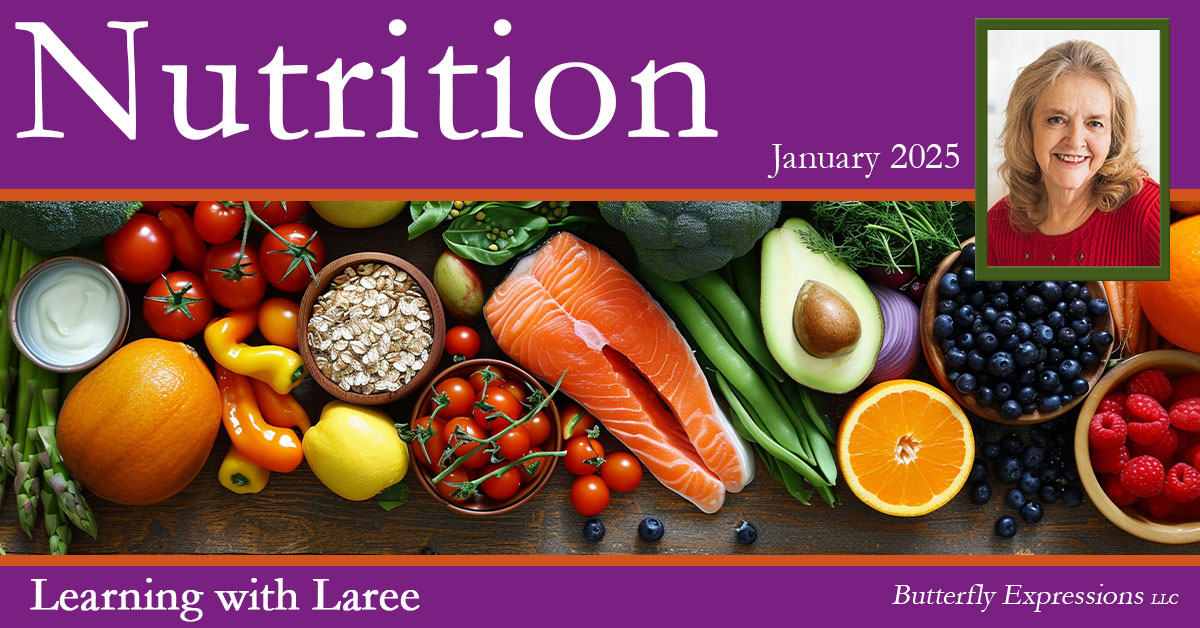
There is, absolutely and without doubt, no road to good health (or recovery from illness and chronic ailments) without good nutrition being a priority every day!
Studies done at the School of Gerontology, University of Southern California, indicate that if a person has a sub-clinical nutritional deficiency, he or she might appear ‘perfectly normal’ except for increased susceptibility to disease, longer recovery time from surgery, adverse reactions to vaccines, extreme fatigue that interferes with normal functioning, depression, insomnia, and irritability.
Richard Revlin, M.D., of the Sloan-Kettering Cancer institute says,
“In the United States today, we rarely see cases of classical vitamin deficiency, such as scurvy and pellagra—to name just a few cited in this article. However, we are now beginning to recognize a vast new series of marginal deficiencies related to disease. Marginal deficiency, it now appears, may be a surprisingly common phenomenon.”
One very important reason herbal remedies work for a particular problem is that the herb has provided one or more vital nutrients that are missing in the diet.
It is important to understand, and remember, that vitamins and minerals chemically constructed in a laboratory cannot fill the nutritional needs of the body. Man has been unable to produce a single molecular structure that is exactly identical to those produced in nature. Laboratories can assemble the correct components in the correct amounts but somewhere in the joining of the atoms will be a rotation to the left that should be rotating to the right. The resulting isomer (that is the scientific word for it) is not bio-identical, no matter what the advertising says. This is as true of hormones and amino acids as it is of vitamins. (Hint: If the supplement you are buying says “L-something or other”, the ‘L’ is a warning that this supplement has been artificially produced in a laboratory and will not be providing the nutrition you think you are getting!
There is a great deal of information about the nutritional components of herbs in the book, Butterfly Miracles with Herbal Remedies which can be purchased at Butterflyexpress.shop. Nutrition and health is a topic that has fascinated me for years. See the full list of topics.
In February our topics are DEPRESSION, ANXIETY, and SELF-ESTEEM. This is a topic that is very near and dear to my heart. There is always a need but it seems that this time of year there is a particular need for things to combat depression and anxiety. I have tried to pick the products that have been the most helpful to me over the years and I hope these things will help you as well.