
Lymph Care Using Foot Zone Techniques
The lymphatic system is a vital part of our circulatory and immune systems. It consists of a network of lymphatic vessels, lymph nodes, and lymphatic organs, including your spleen and tonsils.
How do I adequately describe the lymphatic system without needing as many pages as I print up when teaching about this body-wide system during the Foot Zone therapy classes that I teach?
Let’s begin today by imagining a team inside your body that is constantly working to keep everything—and I do mean everything!— in balance. That is our lymphatic system!
Unfortunately, the amazing lymphatic system has a downside, as well. Bacteria, viruses, and cancer cells that enter the lymphatic vessels can—and sometimes do, if the system is not healthy and working properly—use this system to travel throughout the body. This danger is supposed to be kept to a minimum as lymph fluid passes through the many lymph nodes situated throughout the body. If the immune system is healthy and the lymph fluid is moving as it should be, all will be well. Even cancer cells will be eliminated in an early, unnoticed stage. If not . . . .
Our lymphatic systems also contribute in very important ways to our ability to absorb dietary fats and fat-soluble vitamins. In addition, our lymphatic systems also transport cellular waste, debris, and toxins away from tissues, thus protecting tissues and organs throughout our bodies.
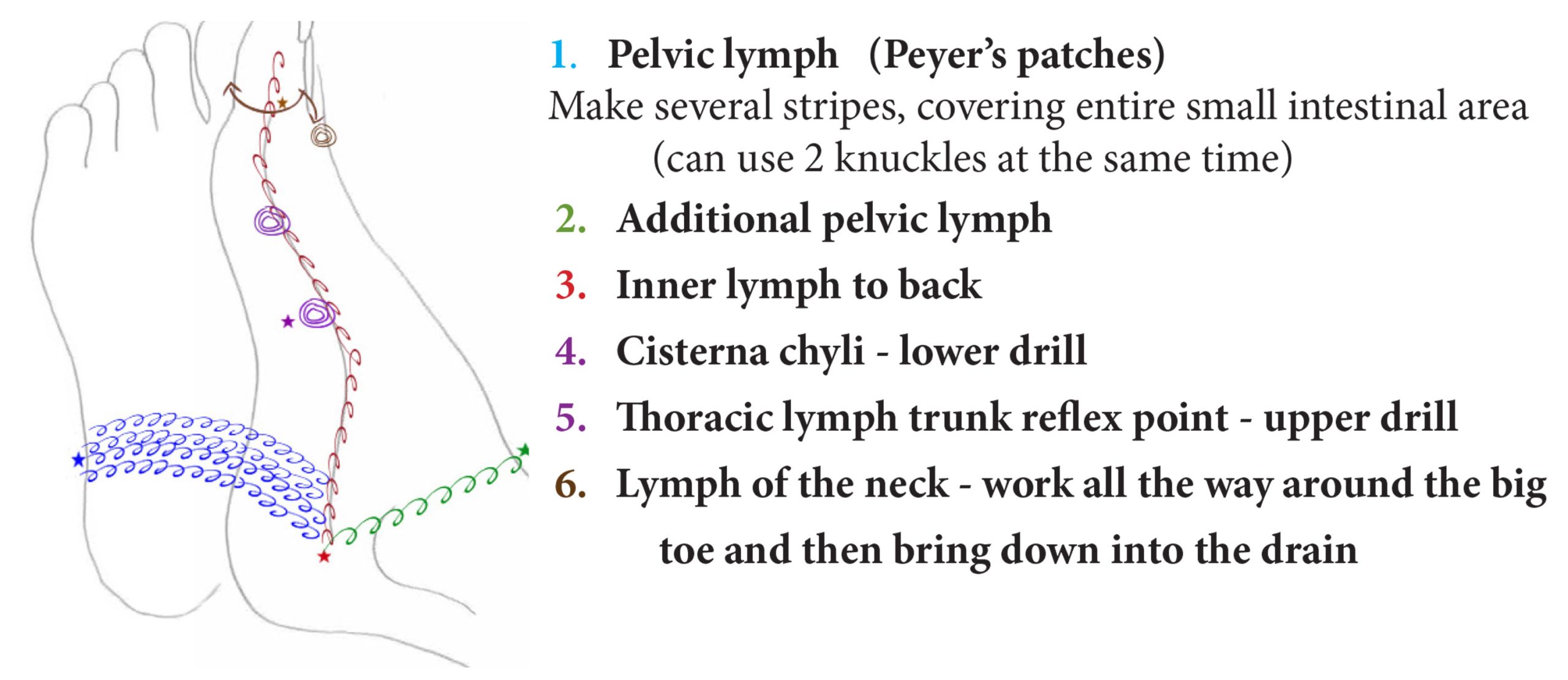
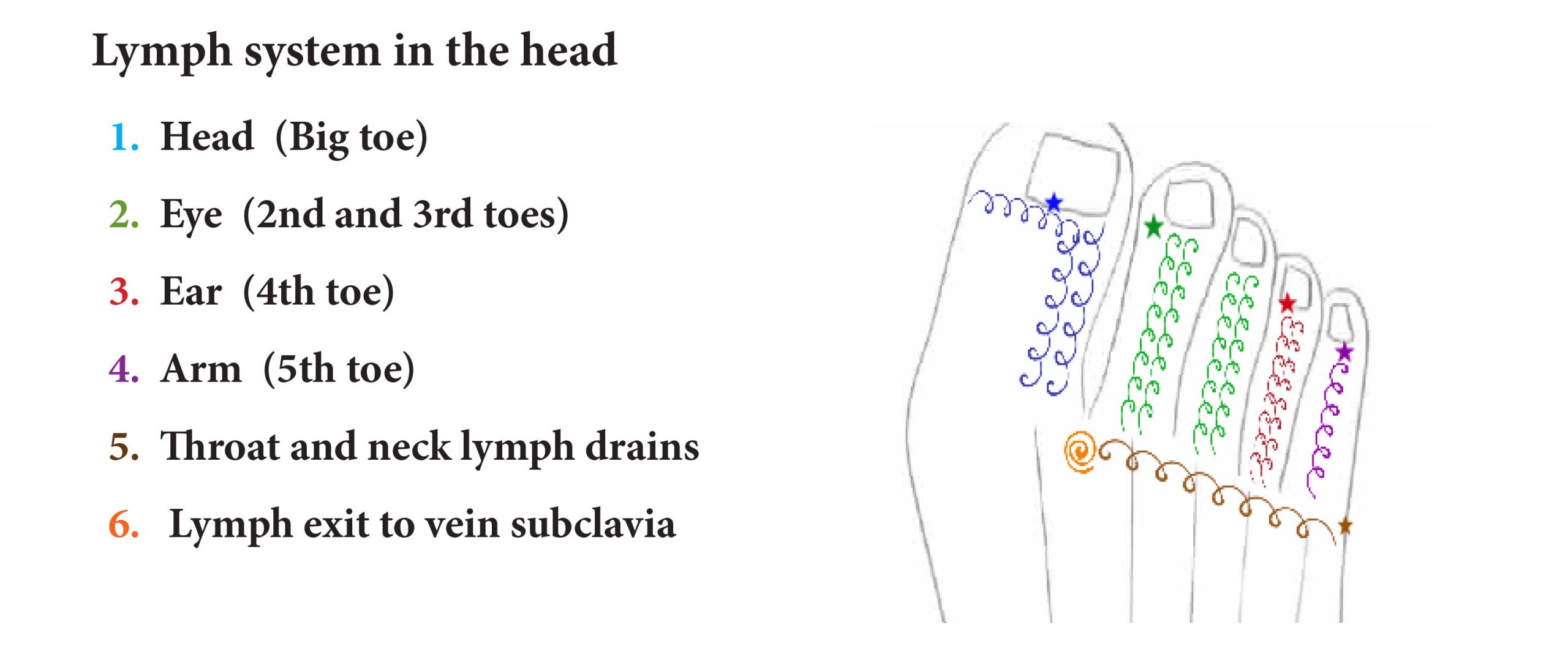
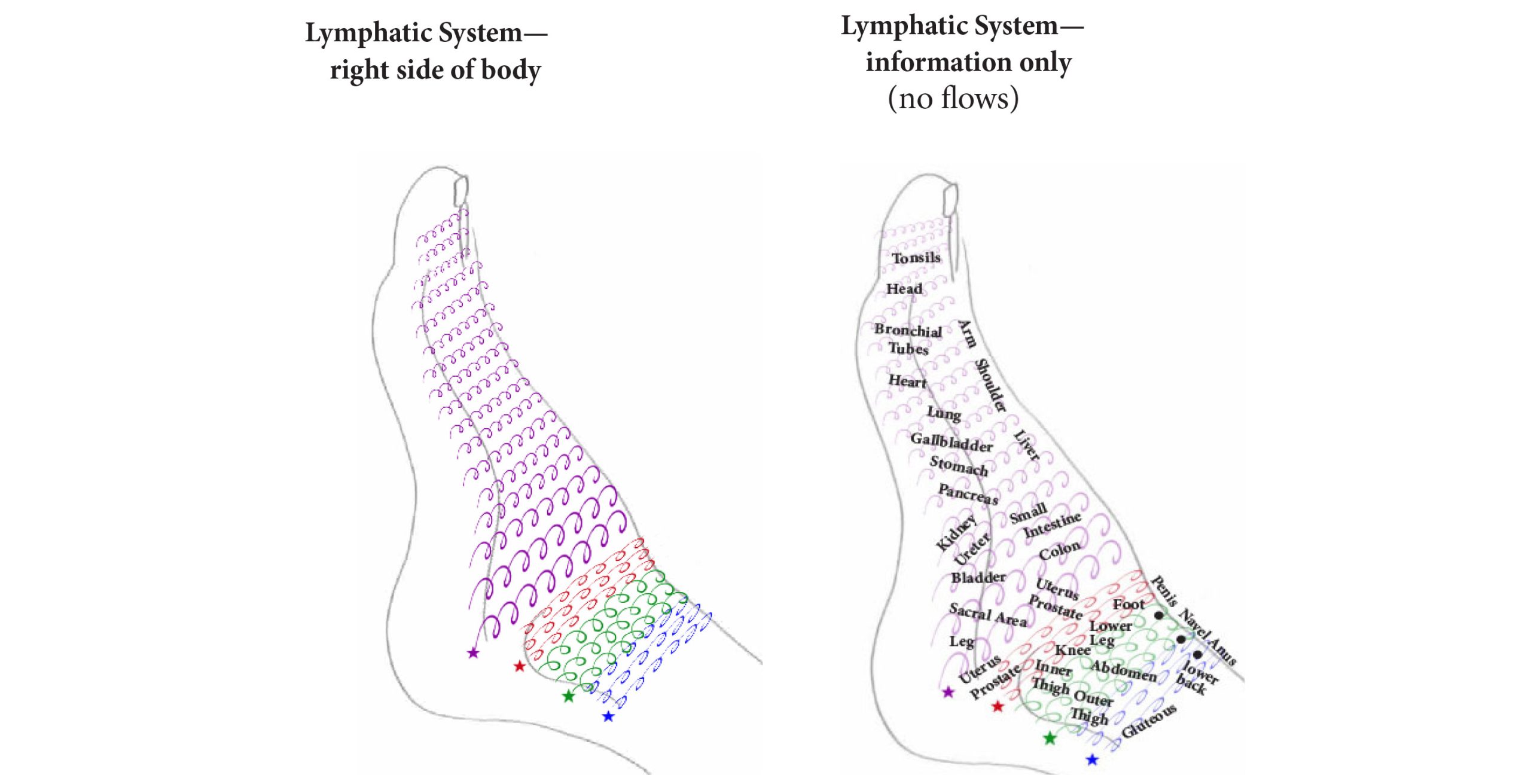
Caring for the various parts of the lymphatic system is precisely what we are doing during a very large portion of every foot zone that we give or get!
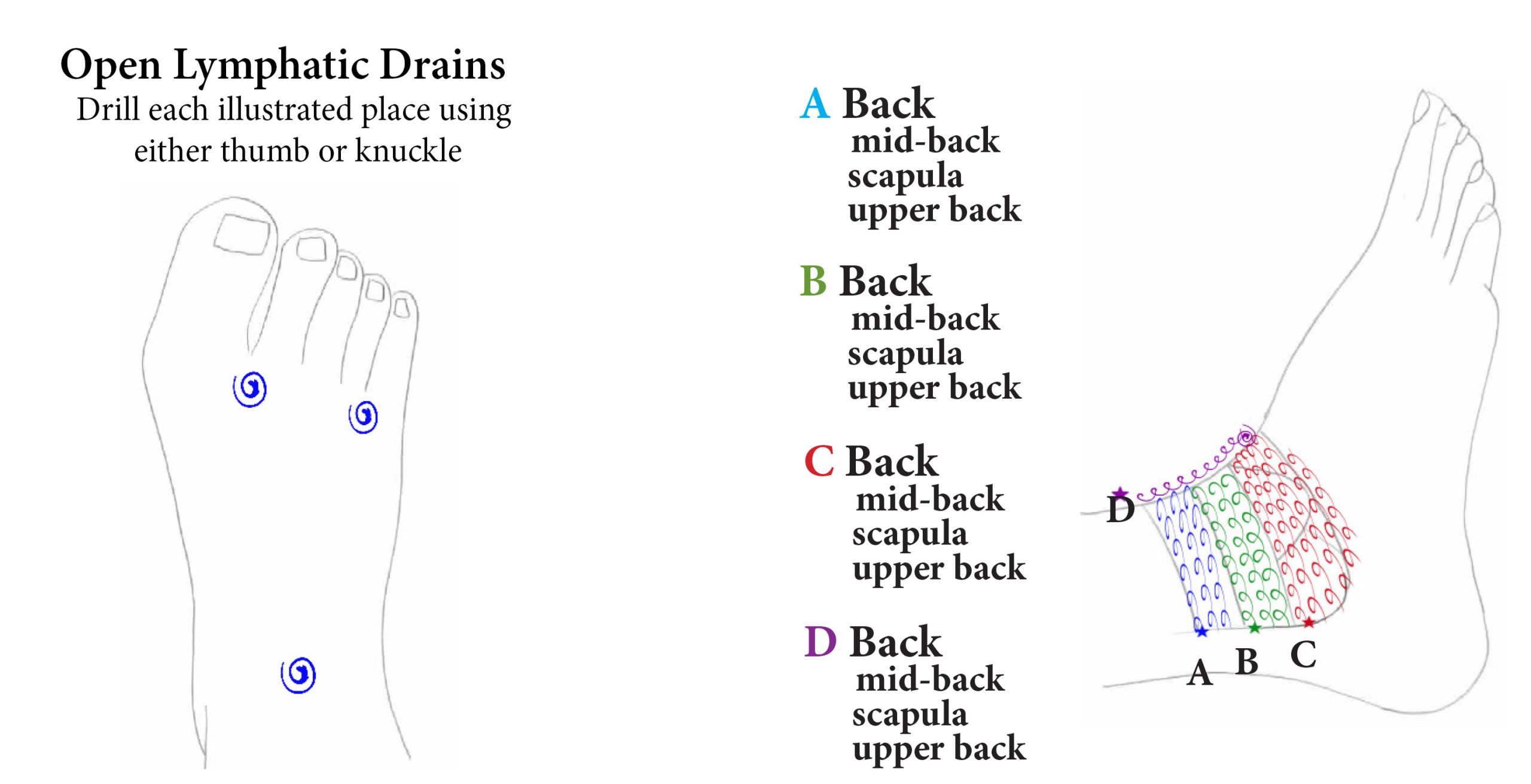
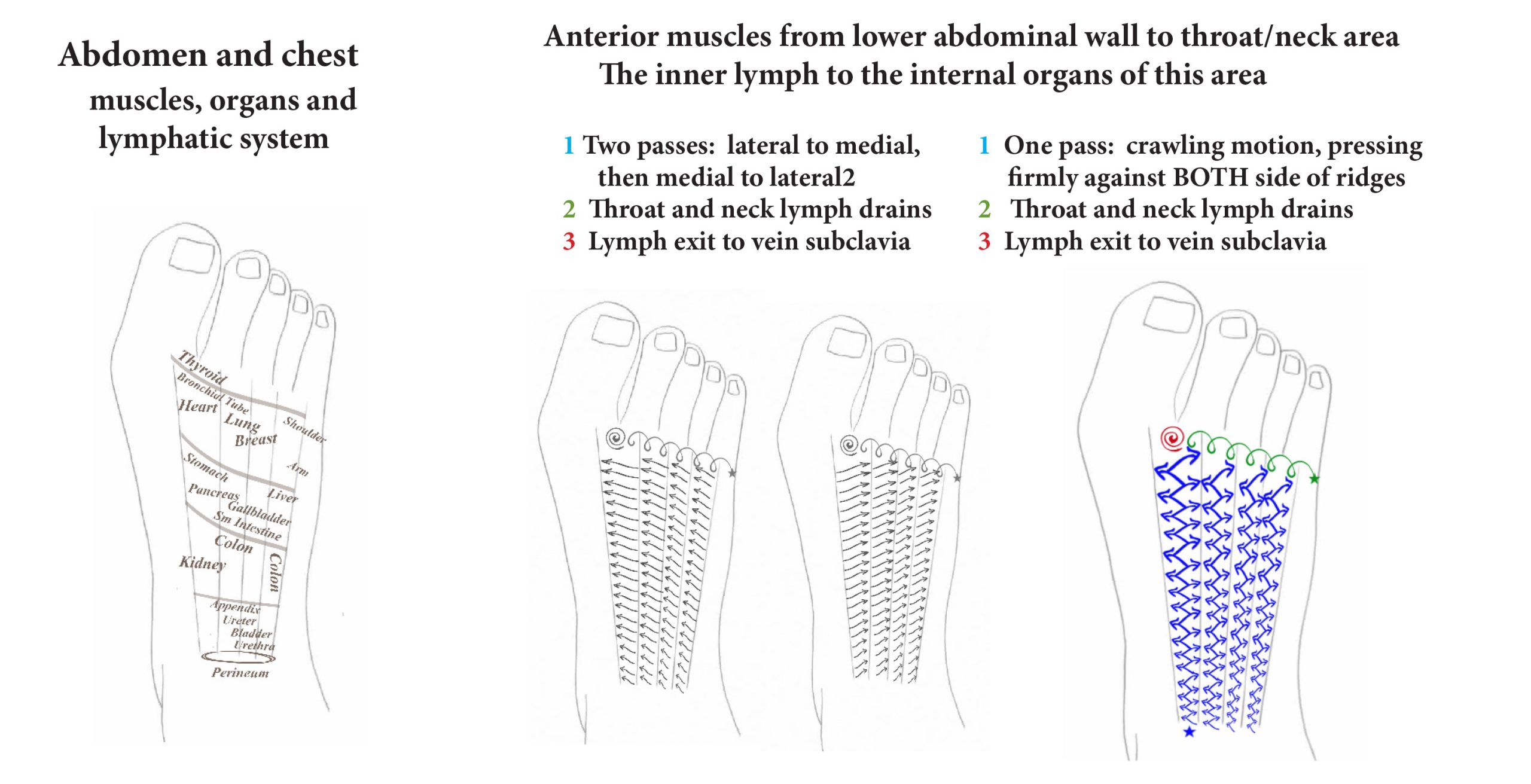
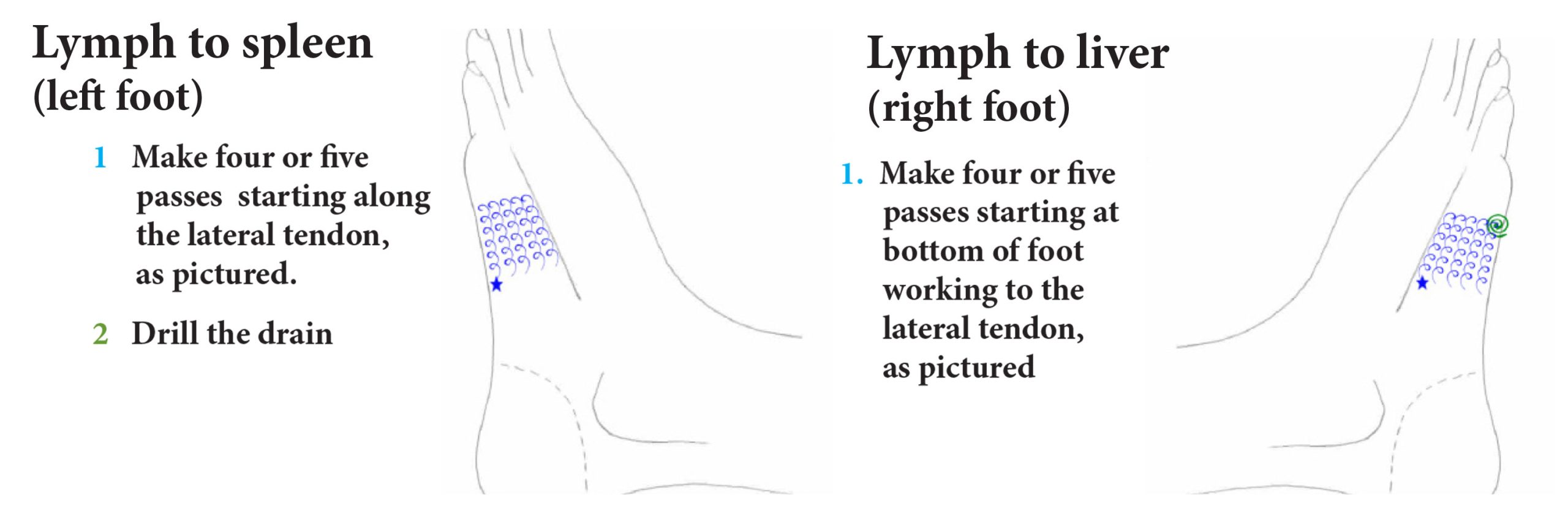
Some Simple Drawings of Foot Zone ‘Flows’ for Lymphatic Congestion as I Work Them.
(Shown only the right foot)
A Few Ways (Besides the Foot Zone) to Get Lymph Moving
1. Breathe deeply. There is approximately three times more lymph fluid moving through the body than there is blood, but the lymph has no pump to keep it moving. Deep breathing—the kind in which your abdomen moves with each breath, stimulates the flow of lymph, and energizes the immune system.
2. Add exercise to your breathing, and you will have turbocharged your lymphatic system and increased, in beneficial ways, your immune responses. A rebound exerciser is believed to be particularly good for your lymphatic system. Whole Body Vibration (I call it being jiggled and I love it!) seems to make my lymphatic system very happy. Involuntary muscle movement promotes lymph flow.
3. Drink plenty of water. Room temperature, or even hot water, sipped frequently throughout the day will re-hydrate the body and get the lymph moving.
4. Alkalize your diet. Simply eat more alkaline foods than you do “junk” or highly acidic foods. Avoid as much as you can sugary treats and beverages. Lessen the amount of meats, breads, grains, dairy, and processed foods that you consume each day. Eat more fruits and vegetables. Green, leafy vegetables provide chlorophyll, which will purify your blood and cleanse your lymph.
5. Add a few good-quality nuts to your diet. Raw, unsalted nuts and seeds are powerhouses of minerals, vitamins, protein, unsaturated fatty acids, and antioxidants.
6. Add herbs, especially lymph-building ones, to your life on a daily basis. A few suggested herbs include: astragalus, barberry, calendula, dandelion, echinacea, elecampane, garlic, ginger, goldenseal, myrrh, rosemary, sage, thyme, and white oak bark.
7. Use essential oils regularly. Regular use of essential oils helps to cleanse the body from toxins, free radicals, cellular debris, heavy metals, petrochemicals, bacteria, and a host of other unwanted things. Suggested oils include cypress, orange, grapefruit, rosemary, peppermint, lemon, and blends such as Butterfly Express LeSolace, LeAgeless, LeCherish, LeCinnamonBear, LeEndoRelief, LeLiteN, LeReflections, LeMillenia, LeRevitalize, LeSunburst, LeSynopsis, LeUnDone, and LeVitality. Which oil to use will depend a lot on where in the body the lymph clogging is most prevalent and what else needs to be accomplished.
8. Clay baths and foot soaks use the pores of the skin, especially the large pores of the feet, to cleanse the liver and move lymph fluid.
9. Gentle massage. It is believed that a gentle massage can push up to 75% of stagnant lymph back into circulation, freeing up trapped toxins.
10. Keep your skeletal structure aligned through chiropractic and/or the regular use of LeMillenia essential oil. LeMillenia, added to the bath or shower, can help the body realign itself or maintain a chiropractic alignment for a much longer time.
11. Dry skin brushing, especially before showering. Use a natural bristle brush. Brush your dry skin in circular motions upwards from the feet to the torso and from the fingers to the chest. The point is to work in the same direction that our lymph flows—toward the heart.
12. A shower in which hot and cold are alternated every few minutes. (Sorry, this one is not for me!) Heat dilates and cold contracts. The lymphatic and circulatory systems run alongside each other in the body. Alternate hot and cold increases both circulation and lymph drainage. Contraindicated for pregnancy and heart conditions.
I find the chosen title of this article, those big bold words above, to be educational all by themselves. WOW! Caring for our lymphatic systems is precisely what we are doing during a ‘cleanse’, even if that cleanse is meant to target the intestinal tract specifically. Every alternative method of eliminating allergies that works recognizes this and works to cleanse and strengthen this vital system.
Your lymphatic system is a vital part of your circulatory and immune systems. It consists of a network of lymphatic vessels, lymph nodes, and lymphatic organs, including your spleen and tonsils.
How do I adequately describe our lymphatic systems without needing as many pages that I take up when teaching about this body-wide system when teaching anatomy during Foot Zone therapy classes?
Let’s begin by imagining a team inside your body that is constantly working to keep everything—and I do mean everything!— in balance. That is our lymphatic system!
Unfortunately, the amazing lymphatic system has a downside, as well. Bacteria, viruses, and cancer cells that enter the lymphatic vessels can—and sometimes do, if the system is not healthy and working properly—use this system to travel throughout the body. This danger is supposed to be kept to a minimum as lymph fluid passes through the many lymph nodes situated throughout the body. If the immune system is healthy and the lymph fluid is moving as it should be, all will be well. Even cancer cells will be eliminated in an early, unnoticed stage. If not . . . .
Our lymphatic systems also contribute in very important ways to our ability to absorb dietary fats and fat-soluble vitamins. In addition, our lymphatic systems also transport cellular waste, debris, and toxins away from tissues, thus protecting tissues and organs throughout our bodies.
A Few Ways to Get Your Lymph Moving
- Breathe deeply. There is approximately three times more lymph fluid moving through the body than there is blood, but the lymph has no pump to keep it moving. Deep breathing—the kind in which your abdomen moves with each breath—stimulates the flow of lymph and energizes the immune system.
- Add exercise to your breathing, and you will have turbo-charged your lymphatic system and increased, in beneficial ways, your immune responses. A rebound exerciser is believed to be particularly good for your lymphatic system. Whole Body Vibration (I call it being jiggled and I love it!) seems to make my lymphatic system very happy. Involuntary muscle movement promotes lymph flow.
- Drink plenty of water. Room temperature, or even hot water, sipped frequently throughout the day will re-hydrate the body and get the lymph moving.
- Alkalize your diet. Simply eat more alkaline foods than you do “junk” or highly acidic foods. Avoid as much as you can sugary treats and beverages. Lessen the amount of meats, breads, grains, dairy, and processed foods that you consume each day. Eat more fruits and vegetables. Green, leafy vegetables provide chlorophyll, which will purify your blood and cleanse your lymph.
- Add a few good-quality nuts to your diet. Raw, unsalted nuts and seeds are powerhouses of minerals, vitamins, protein, unsaturated fatty acids, and antioxidants.
- Make herbs, especially lymph-building ones, to your life on a daily basis. A few suggested herbs include: astragalus, barberry, calendula, dandelion, echinacea, elecampane, garlic, ginger, goldenseal, myrrh, rosemary, sage, thyme, and white oak bark.
- Use essential oils regularly. Regular use of essential oils helps to cleanse the body from toxins, free radicals, cellular debris, heavy metals, petrochemicals, bacteria, and a host of other unwanted things. Suggested oils include cypress, orange, grapefruit, rosemary, peppermint, lemon, and blends such as Butterfly Express LeSolace, LeAgeless, LeCherish, LeCinnamonBear, LeEndoRelief, LeLiteN, LeReflections, LeMillenia, LeRevitalize, LeSunburst, LeSynopsis, LeUnDone, and LeVitality. Which oil to use will depend a lot on where in the body the lymph clogging is most prevalent and what else needs to be accomplished.
- Clay baths and foot soaks use the pores of the skin, especially the large pores of the feet, to cleanse the liver and move lymph fluid.
- Gentle massage. It is believed that a gentle massage can push up to 75% of stagnant lymph back into circulation, freeing up trapped toxins.
- Keep your skeletal structure aligned through chiropractic and/or the regular use of LeMillenia essential oil. LeMillenia, added to the bath or shower, can help the body realign itself or maintain a chiropractic alignment for a much longer time.
- Dry skin brushing, especially before showering. Use a natural bristle brush. Brush your dry skin in circular motions upwards from the feet to the torso and from the fingers to the chest. The point is to work in the same direction that our lymph flows—toward the heart.
- A shower in which hot and cold water are alternated every few minutes. (Sorry, this one is not for me!) Heat dilates and cold contracts. The lymphatic and circulatory tun alongside each other in the body. Alternate hot and cold increases both circulation and lymph drainage. Contraindicated for pregnancy and heart conditions.

The heart is an incredible muscle—yes, muscle. The amount of work done by the heart each day is almost too incredible to even believe. The body contains approximately six quarts of blood. This blood is pushed through the blood vessels over 1000 times in a day. The heart, incredibly, pumps about 6000 quarts (about 1,500 gallons) of blood in a single day for all the days of one’s life!
There is simply no way that I can cover the complicated workings and anatomy of the heart in this article. (I certainly do try during Foot Zone Therapy classes, as some of you can probably attest, to do my best with pages and pages of information—possibly too much information—in the material provided.
Two systems regulate heart activity. One involves the nerves of the autonomic nervous system and acts as an accelerator and as brakes for the heart rate. The other is the intrinsic conduction system—nodes which are built right into the heart tissue. This system sets the basic rhythm of the heart. For this article, let me stress firmly (very firmly) that when a person is under either physical or emotional stress, the heart works much too hard, pumping faster and more forcefully, in order to make more oxygen and glucose available to the systems of the body. The good news: For people who know how to handle stress more calmly or know how to rest and rejuvenate between periods of stress or hard work, the heart will slow down and beat steadily. This gives the heart a period of rest when the crisis is over.
Stress Cardiomyopathy – Broken Heart Syndrome
A troubled mind may lead to a broken heart in a very literal and physical sense.
Many patients arriving at emergency rooms and doctors’ offices with symptoms of a heart attack have just experienced the death or loss of a loved one. Traumatic experiences such as a car accident or mugging are also recognized as triggers for heart attack-type symptoms.
Intense emotional events can trigger your sympathetic nervous system, unleashing a flood of chemicals. This sudden surge of chemicals can stun the heart’s muscle and leave it temporarily, and sometimes permanently, unable to pump properly. In medical speak, this is referred to as ‘Stress Cardiomyopathy’. Energy workers often refer to this situation as ‘Broken Heart Syndrome’. It is very real!
My point? If we insist on living our lives in real or imaginary stress, we will be increasing, daily, the stress on our hearts.
A second point? Anything that strengthens you emotionally—whether oils, herbs, exercise, faith, or anything else—will benefit your heart. . . and the heart certainly needs all the help that we can give it. Statistically speaking, heart disease of various types is the leading cause of death for both men and women and has been for more than a century!