The Vagus Nerve
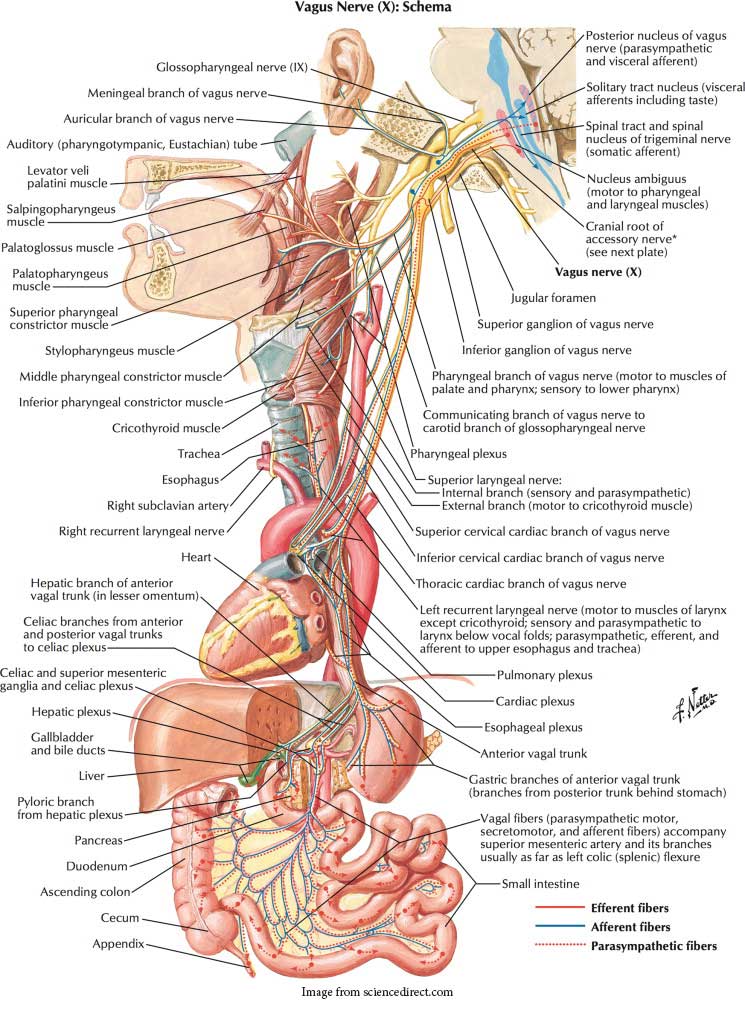
The Vagus Nerve extends from the hypothalamus area of your brain, hitting the ear, then going down through the chest, diaphragm, and then down to the intestines, with branches wrapping around your heart and communicating with many, many other organs on the way.
This very important nerve impacts every system of the body in one way or another. To paraphrase what I heard a fellow footzone instructor, Brad Noall, say (more than once) when I took his class about 10 years into my own years as a footzone therapist, “The Vagus Nerve is, or could be, the answer to nearly every question on a footzone class final test.” It is my belief, based on years of experience, that the Vagus Nerve impacts and plays a role, somehow or another, as this quote from Brad illustrates, with every system of the body!
I would like to share with you, in this newsletter, a small part of the things we discuss about the Vagus Nerve when holding Foot Zone classes at ButterflyExpressions. (I love to teach, especially anatomy for any reason whatsoever, so teaching ‘the Zone’ is particularly fun for me!)
The Vagus Nerve and the Nervous System
There is, of course, no time nor space for an entire Medical School treatise on the Nervous System or even just the Vagus nerve and all of its functions in the body in this newsletter
The Vagus is an integral part of every branch of the Nervous System. It has roles to play in both the Central Nervous System (Brain, Brain Stem, and Spinal Cord), and in the Autonomic Nervous System with its three divisions (Peripheral Nervous System, Sympathetic Nervous System, and what I refer to as the Social Engagement Network—which is a discussion for another day).
The sympathetic division mobilizes the body’s organs and systems during extreme situations such as fear, anger, and increased activity and exercise. The parasympathetic division allows us to “wind down”, returning to a less energy-intensive state when the crisis is over.
The Sympathetic division of the ANS
Often referred to as the “fight or flight” system, the sympathetic division becomes active when we are excited or find ourselves in an emergency or threatening situation. There is a third aspect to the sympathetic nervous system. This is the “freeze” mode.
The sympathetic division works at full speed when we are emotionally upset as well as when we are physically challenged. The adrenal glands pump excessive amounts of hormones into the system. Sympathetic nervous system activation can last for several minutes—or forever if we insist on remaining emotionally triggered. The effects will last until the excess hormones produced but no longer needed are destroyed by the liver. A compromised liver slows this process, leaving us in a state of hyperactivity and vigilance, with unneeded hormones creating havoc in our bodies. Often referred to as the “fight or flight” system, the sympathetic division becomes active when we are excited
The Parasympathetic division of the ANS
The Parasympathetic Nervous System is in charge of and controls the basic functions of the body that occur without a person even giving it a thought. These functions include, to name just a few, the heartbeat, breathing, digesting, and even sweating.
This system is most active when the body is at rest and not threatened in any way. Energy is being conserved by the body. The parasympathetic division is sometimes referred to as the “resting and digesting” division of the ANS. Blood pressure and respiratory rates are being regulated at low normal levels, and the digestive tract is actively engaged. The skin is warm because there is no need to divert blood supplies to fight or flight mechanisms. The parasympathetic division might even be described as the “housekeeping” (repairing) system of the body.
The Vagus Nerve and the Digestive System
One of the important functions of the vagus nerve is to send and receive messages to control the functioning of the digestive system. In fact, this nerve is the main communication between the brain and the digestive system.
The ability of the body to uptake nutrients is greatly compromised when communication between the Vagus Nerve and the digestive system is disrupted in any way. As a result, overall health deteriorates as organs are ‘starved’ of the nutrients that they need. The body, meaning the nervous system, simply cannot be in a ‘stressed and non-restful state’ and take up nutrients.
The sensation of being full is also transmitted to the brain by the vagus nerve. Stimulation and balance of the vagus nerve is a great help in controlling weight gain. Digestive enzymes are produced and released in the stomach according to this input, telling us whether or not we are full or hungry, satisfied or unsatisfied with what we have eaten. The vagus nerve has a tremendous impact on food cravings and the ability to control them.
The vagus nerve is also responsible for muscle control throughout our digestive systems. This would include the muscle contractions and relaxations that make up the peristalsis that moves things along to excretion in the intestinal tract.
Other Responsibilities of the Vagus Nerve
The excretion of wastes by the kidneys is influenced by the branches of the nerve that reach the kidneys and the bladder.
The Vagus Nerve stimulates secretions from the pancreas as well as stimulates the excretion of hydrochloric acid in the stomach. Diabetes and digestive issues of all sorts depend on a healthy Vagus Nerve and a healthy Nervous System overall.
This nerve is also responsible for sensory and motor functions to the pharynx, larynx, esophagus, trachea, and bronchi.
The vagus nerve regulates the heartbeat and blood pressure. Further, this nerve controls the coughing reflex, the breathing reflex, and the vomiting reflex.
It also helps regulate body temperature by stimulating sweat glands. Of course, many other glands of the body are also responsive to the Vagus Nerve! In fact, the entire endocrine system answers, in my ways, to signals from this important nerve!
Activating and Regulating the Vagus Nerve
Fortunately, there are many ways to activate and strengthen the Vagus nerve. One very simple way is deep breathing exercises.
Taking a deep breath in through your mouth and breathing so deeply that your stomach rises and your diaphragm expands, then slowly breathing out through your nose, will kick your vagus nerve into gear and activate your parasympathetic nervous system.
It is claimed that doing any type of singing strengthens the Vagus Nerve.
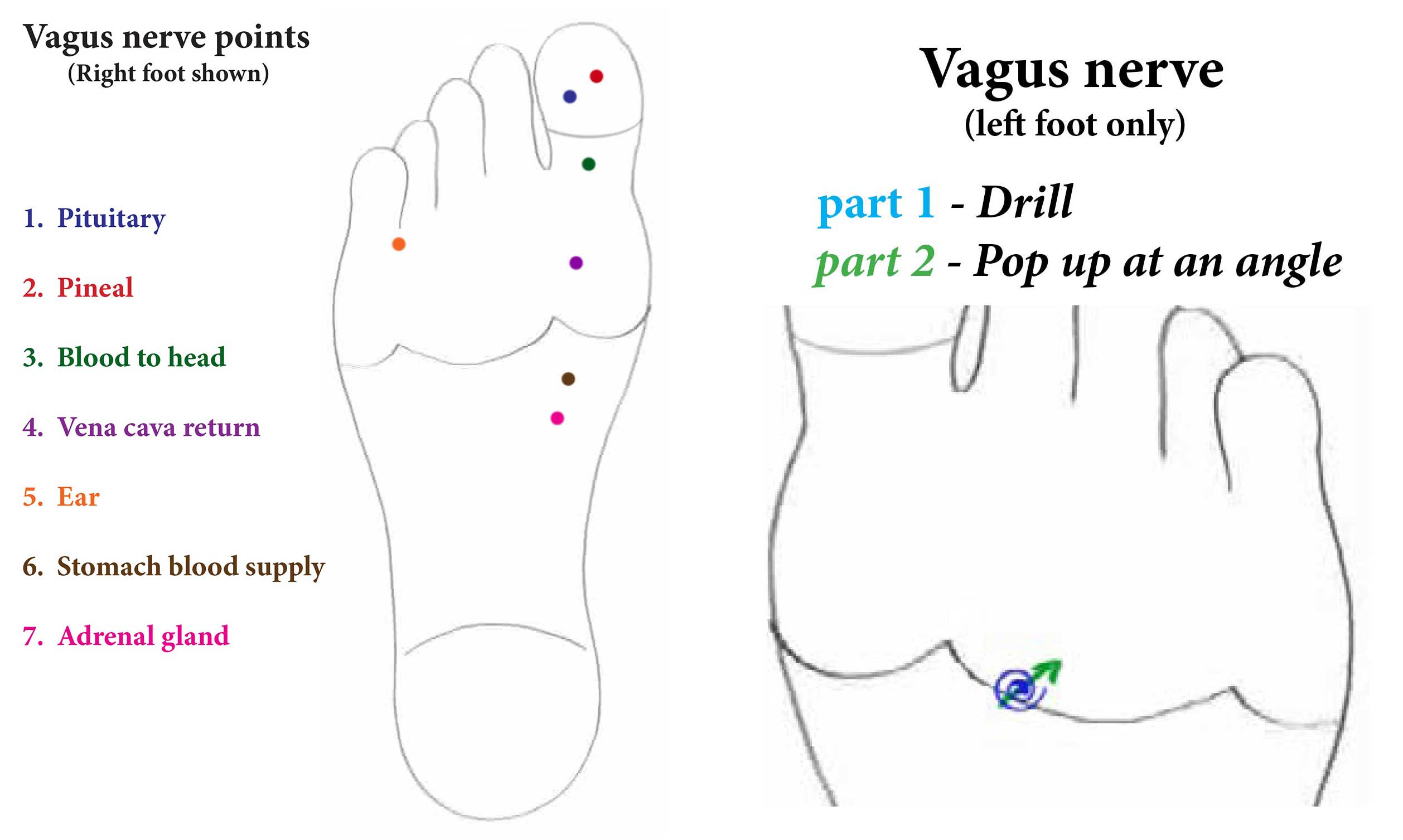
AND, of course, there are Vagus nerve foot-zone points on the feet (or points on the hand if you can figure out how to make the correlation).